100 Things to Do in Mumbai (2026): Sights, Food, Markets and Days Out
Mumbai rewards people who stay longer than the Gateway and Marine Drive, and it rewards them in odd places: a temple tank older than the city, a cinema that has shown the same film every day since 1995, a lane of wooden houses between the towers, a market that sells flowers by the sack before dawn. This is our list of 100 things worth doing here, from the obvious sights to the ones locals take visitors to, grouped by theme and linked to our full guides so you can plan each one properly.
A few things apply to almost everything below. The city is best early in the morning and around sunset, when it is coolest. Distances are long and traffic is slow, so plan one area a day. And check the closing days before you set out: Elephanta and the national park close on Mondays, the Bhau Daji Lad Museum and the Byculla Zoo on Wednesdays, and most of the old bazaars on Sundays.
The big sights
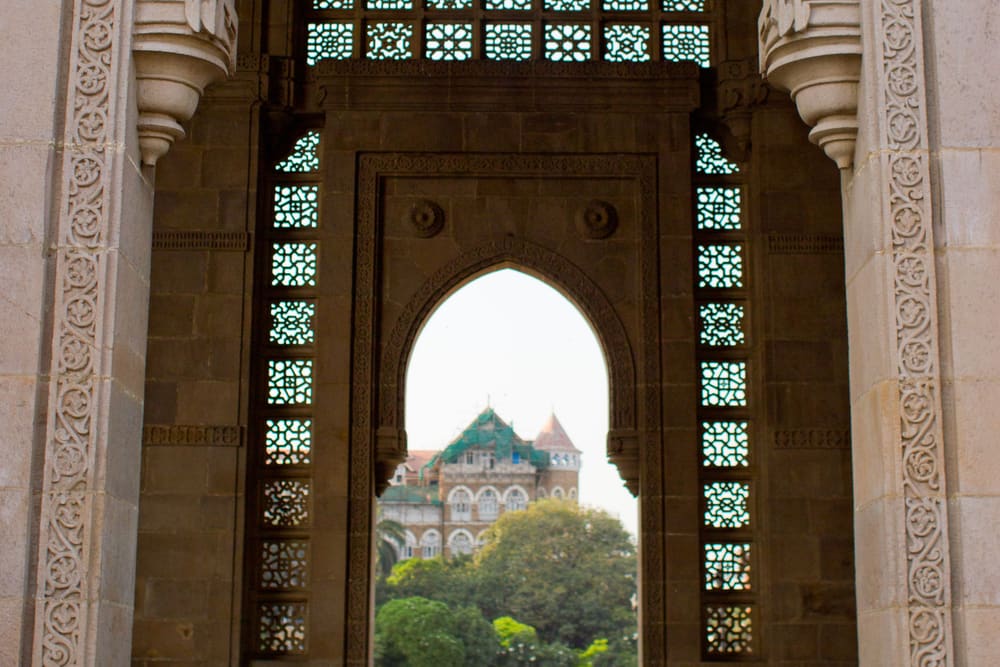
1. Watch the Gateway of India wake up. The basalt arch at Apollo Bunder, completed in 1924, is at its best early in the morning, before the crowds and the heat, with the Taj Mahal Palace behind you. Leave large bags behind; there is security screening. Gateway of India
2. Look up inside CSMT. Chhatrapati Shivaji Maharaj Terminus, finished in 1887, is a UNESCO World Heritage Site that still handles trains all day. See the facade from the traffic island opposite the main entrance, then go in and look at the ceilings and staircases. The Heritage Gallery runs tours on weekday afternoons. CSMT
3. Walk Marine Drive at sunset. The 3.6 km sea wall known as the Queen’s Necklace faces west, so walk north from Nariman Point an hour before sunset and the sun goes down ahead of you. Marine Drive and our Marine Drive guide
4. Take the boat to Elephanta. An hour across the harbour from the Gateway are the rock-cut cave temples of Gharapuri island, carved between the 5th and 8th centuries, with the six-metre Trimurti, a three-headed image of Lord Shiva, at their heart. Take the first boat, wear the life jacket, and note that the caves and ferries close on Mondays. Elephanta Caves
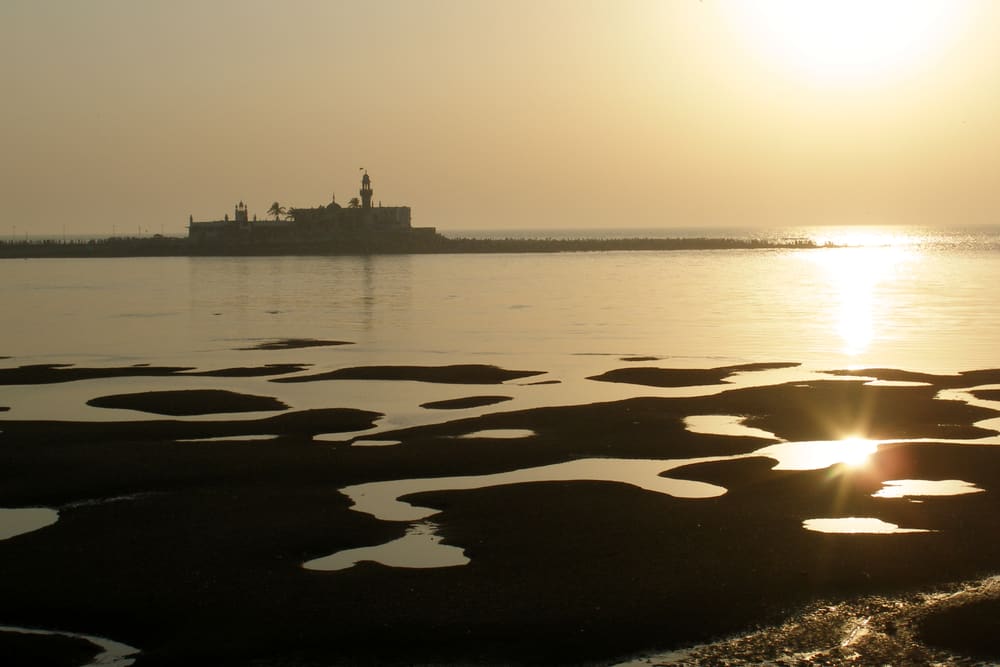
5. Walk out to Haji Ali at low tide. The 15th-century shrine sits on an islet at the end of a causeway that floods at high tide, so check the tide times first. Dress modestly and cover your head inside; Thursday evenings bring qawwali. Haji Ali Dargah
6. See the Sea Link light up from Bandra Fort. The terraces of Castella de Aguada, the watchtower the Portuguese built in 1640, give the best sunset view in the city, with the cable-stayed bridge lighting up across the bay. When you leave Bandra, ask your taxi to take the Bandra–Worli Sea Link: it turns a slow hour into ten minutes. Our Bandra guide has the walk.
7. Look down on the Dhobi Ghat. From the road bridge beside Mahalaxmi station you look straight down on the city’s open-air laundry, in use since 1890: rows of washing pens, flogging stones and colour-sorted lines of sheets. The view is free; go between 6 and 11 AM, when the washing is in full swing. Mahalaxmi Dhobi Ghat
8. See the necklace from above. The streetlights of Marine Drive only look like a necklace from height. Go up Malabar Hill after dark to Kamala Nehru Park, which looks straight down the curve of the bay; the Hanging Gardens are across the road. Hanging Gardens and Kamala Nehru Park
9. Browse Colaba Causeway. The pavement market from Regal Cinema towards the Gateway sells scarves, silver, sandals, brass and books, backed by old shops and cafes. Browsing costs nothing; bargain at the stalls and mind your pockets. Colaba Causeway and our Colaba guide
10. Queue at Siddhivinayak. The city’s most visited Ganesh temple, in Prabhadevi, draws film stars and millworkers to the same line. Entry is free, phones and bags go in lockers outside, and Tuesdays are very crowded. Siddhivinayak Temple
Old Bombay on foot
11. Walk the Fort on a Sunday morning. The streets around Flora Fountain, the 1864 fountain at Hutatma Chowk, are at their emptiest and best on a Sunday morning. Our heritage walk and Fort and Kala Ghoda guide take you round.
12. Sit on the Asiatic Society steps. On the east side of Horniman Circle, a round garden ringed by arcaded bank buildings, stands the Town Hall, home of the Asiatic Society of Mumbai, whose broad steps are one of the city’s best-known sights. The society traces its history to 1804.
13. Step into St Thomas Cathedral. The oldest church in Mumbai, begun in 1676 and consecrated on Christmas Day 1718. Its marble memorials to soldiers and officials are a quiet history of the British in western India.
14. Stand in the middle of the Oval Maidan. On one side are the Victorian Gothic High Court and the 85-metre Rajabai Clock Tower; on the other, the Art Deco apartment blocks of the 1930s. Standing between them, with cricket going on around you, is the best way to see why UNESCO listed the two together.
15. Find the Afghan Church. At the southern end of Colaba, the Church of St John the Evangelist was built between 1847 and 1858 to remember the dead of the First Afghan War. Its tall Gothic spire and stained glass are worth the walk.
16. See a show at the Royal Opera House. India’s only surviving opera house, inaugurated in 1911, closed in the 1990s and reopened in 2016 after a restoration that won a UNESCO heritage award. The inside is the reason to go, so book a concert or a play. Our Girgaon guide covers the area.
17. Visit Mani Bhavan. The Gamdevi house from which Mahatma Gandhi ran his work in Mumbai between 1917 and 1934 is now a museum. Entry is free, with donations welcome; ask to see the letter he wrote to Hitler. Mani Bhavan
18. Sit by Banganga Tank. At the tip of Malabar Hill, below the mansions, a stone tank surrounded by steps, small temples and old houses, built in 1127 and rebuilt in 1715. It is calm at almost any hour. Our hidden gems guide has more.
19. Walk through Khotachiwadi. A late-18th-century settlement of two-storey wooden houses with verandahs and outside staircases, still lived in by East Indian Christian families, between the high-rises of Girgaon. These are homes: keep your voice down and ask before photographing.
20. Visit the Blue Synagogue. Keneseth Eliyahoo in Kala Ghoda, completed in 1884 by the Sassoon family, is painted a startling turquoise and is beautiful inside. It admits visitors at set times, with photo ID and a fee, and closes to visitors for the Sabbath.
21. Book a sunrise at Lok Bhavan. The Governor’s residence on Malabar Point, renamed from Raj Bhavan in December 2025, takes small groups round its forest and sea-facing grounds early in the morning, including a British-era underground bunker. Book through the official Lok Bhavan website, weeks ahead, and carry ID.
22. Explore Worli Koliwada. At the end of Worli Sea Face, the Koli fishing village is centuries older than the towers around it, with the Golfadevi temple, murals painted since 2022 and, on the hill, a small British fort from around 1675 looking across to the Sea Link. Go in daylight. Our Worli guide has the walk.
Museums, galleries and stages
23. Spend a morning at CSMVS. The city’s grand museum in Kala Ghoda, under its Indo-Saracenic dome, runs from Indus Valley seals to Mughal miniatures, with a children’s museum alongside. CSMVS
24. See the city’s own story at the Bhau Daji Lad Museum. Mumbai’s oldest museum, in the Byculla zoo gardens, is a restored Victorian jewel box about the city itself. It is closed on Wednesdays. Dr Bhau Daji Lad Museum
25. Gallery-hop in Kala Ghoda. Start at the Jehangir Art Gallery, free and with new shows most weeks, where artists are often present, then browse the pavement art outside and the galleries in the lanes around Rampart Row. Kala Ghoda and Jehangir Art Gallery
26. Look at the art in the NMACC. The Nita Mukesh Ambani Cultural Centre at the Jio World Centre in BKC has a 2,000-seat theatre for touring musicals, but you need no ticket for some of its best things: the public art in its lobbies includes a 56-foot Pichwai painting and Yayoi Kusama’s field of mirrored Clouds. Our BKC guide has more.
27. Go to a concert at the NCPA. The National Centre for the Performing Arts at Nariman Point is the city’s main stage for classical music, dance and theatre, and an evening there is one of the best Mumbai offers. Our What’s On page lists what is coming up.
28. Catch a play at Prithvi Theatre. The Juhu theatre the Kapoor family opened in 1978 stages plays most evenings, mostly in Hindi and English, and its open-air cafe under the trees is an institution. Book ahead; the small auditorium sells out. Our Juhu guide covers the area.
29. Watch a new Hindi film at Regal. The Art Deco cinema at the top of Colaba Causeway has shown films since 1933. A big release in a big single-screen hall, with a crowd that cheers the hero’s entrance, is a different thing from a multiplex.
30. See DDLJ at Maratha Mandir. The single-screen cinema near Mumbai Central has shown Dilwale Dulhania Le Jayenge every day since the film opened on 20 October 1995, at a late-morning show. Tickets are cheap and the audience still whistles at the songs.
31. Tour Film City. Private operators run tours of the government studio complex in Goregaon: sets, a dance show and sometimes a shoot seen from a distance. Go for the sets, not to meet stars. Our hidden gems guide has a section on Bollywood.
32. Book a stand-up comedy night. Comedy is huge in Mumbai, and the best-known comedians sell out. Book on District or BookMyShow, and see our nightlife guide for the venues.
The sea front
33. Eat bhelpuri on Girgaon Chowpatty. The beach at the northern end of Marine Drive, with bhel stalls, kulfi, gola and balloon sellers. The licensed food plaza is the safe bet, and swimming is not advised. Girgaon Chowpatty
34. Spend an evening on Juhu Beach. The suburbs’ people’s beach: arrive about 45 minutes before sunset and eat where the crowd is at the Juhu Chowpatty end, where the pav bhaji pans are hottest. Do not swim or wade deep. Juhu Beach
35. Walk Bandstand and climb to Mount Mary. Bandra’s 1.2 km walkway along the rocks ends at Bandra Fort; take the steps up the hill afterwards to the basilica. Bandstand Promenade
36. Watch the sunset from Carter Road. The seafront promenade north of Bandstand faces west and is lined with cafes for dinner afterwards. Start at the Khar end, near the Koli fishing village of Khar Danda, and walk south. Our Khar guide has the walk.
37. Walk the Coastal Road promenade. If Marine Drive is too crowded, the sea-facing promenade built with the Coastal Road, opened in August 2025, runs for about five kilometres past Haji Ali to Worli, with a cycle track and far fewer people. Our Worli guide explains where it starts and stops.
38. See the sunset at Versova. Take Metro Line 1 to the end of the line and walk to a beach that volunteers cleared of millions of kilos of rubbish from 2015, where olive ridley turtle hatchlings were seen again in 2018. The old Koli village and its jetty are at the northern end. Our Andheri guide has the details.
39. Go to Sassoon Dock at dawn. Colaba’s fishing dock, built in 1875, comes alive soon after dawn as the boats unload and Koli fisherwomen auction the catch. Wear shoes you can wash, keep out of the way of the porters, and keep your camera away: photography is not allowed.
40. Take the five-minute ferry from Marve to Manori. Small boats cross the creek every few minutes for a few rupees to a village with its own beach. Come back for the sunset at Aksa Beach, and do not swim. Our Malad guide explains the coast.
Temples, shrines and churches
41. Hear the evening aarti at the Mahalaxmi Temple. On the shore near Breach Candy, the three goddesses Mahalaxmi, Mahakali and Mahasaraswati are dressed in gold and pearls; the evening aarti is at about 7:20 PM. Our Mahalaxmi guide has the walk from the Dhobi Ghat.
42. Visit Mount Mary. A shrine has stood on the hill above Bandra since the 16th century; the present neo-Gothic basilica dates from 1904, and its fair in the week after 8 September is one of the city’s biggest. Mount Mary Basilica
43. Climb to Babulnath. The Shiva temple on its hillock at the foot of Malabar Hill is one of the oldest in the city, and busiest on Mondays and during the month of Shravan.
44. Join the evening aarti at ISKCON Juhu. The Hare Krishna temple complex a few minutes from Juhu Beach draws devotees and visitors to its evening aarti; its vegetarian restaurant, Govinda’s, is inside.
45. Sit under the dome of the Global Vipassana Pagoda. A golden 96-metre pagoda at Gorai with the world’s largest pillarless stone dome. Entry is free, and so is a short guided meditation for visitors; you pay only for the ferry from Gorai jetty. Global Vipassana Pagoda
46. Pay your respects at Chaitya Bhoomi. At the sea end of Shivaji Park stands the memorial to Dr Babasaheb Ambedkar, the architect of the Indian Constitution, built as a Buddhist chaitya. Remove your shoes and keep a respectful silence; on 6 December, Mahaparinirvan Din, the anniversary of his death, millions come.
47. Sit in on the evening arti at the Ramakrishna Mission. The Khar ashrama, dedicated in 1926, is the calmest half-hour in the suburbs, especially at the sunset arti with singing. Take off your shoes and keep your voice down; it is a working monastery.
48. Feed the cows at the Bombay Panjrapole. Deep in the bazaar lanes of Bhuleshwar is an animal shelter founded in 1834, home to hundreds of cows as well as goats, donkeys and birds. For a small donation you can feed the cows greens. It is one of the strangest and most peaceful places in the city.
Markets and shopping
49. Shop the arches of Crawford Market. The Victorian produce market, ten minutes on foot from CSMT, has friezes by Rudyard Kipling’s father. It is mostly closed on Sundays; say no to porters offering to guide you. Crawford Market
50. Dig through Chor Bazaar on a Friday. The old “thieves’ market” of brass, antiques and film posters puts out its street stalls on Friday mornings. Assume anything is a reproduction unless proven otherwise, and carry cash. Chor Bazaar
51. Walk the Dadar flower market before breakfast. Next to Dadar station, the city’s main flower market starts unloading around 4 AM and is mostly done by 7:30: lanes of marigold, tuberose and mango leaves, with porters running past. Then have misal pav at one of Dadar’s old breakfast houses. Our Dadar guide has both.
52. Lose an afternoon in the old bazaars. North of Crawford Market, Mangaldas Market sells fabric by the metre, Zaveri Bazaar is the city’s jewellery market, and the lanes of Bhuleshwar sell flowers, puja supplies and kitchenware. Our shopping guide explains how they fit together.
53. Follow your nose to the Lalbaug spice market. Shops here roast chillies and whole spices on big iron pans and grind masala to order for households buying their year’s supply. Buy a small packet of house garam masala to take home. Our Lower Parel guide covers Lalbaug.
54. Bargain on Linking Road and Hill Road. Bandra’s shopping streets: Linking Road for stalls of shoes, bags and clothes, and Hill Road for fabric, accessories and the chaat around Elco Market. Bargain at the stalls; the shops have fixed prices.
55. Browse Kitab Khana and the pavement booksellers. One of the city’s best-loved bookshops, in a 150-year-old building near Flora Fountain, is a short walk from the pavement booksellers where DN Road meets MG Road. Bargain on the pavement, and check that a new book is not a photocopy.
56. Watch the potters of Kumbharwada. In Dharavi’s potters’ quarter on 90 Feet Road, settled by potters from Gujarat generations ago, clay lamps dry in the lanes before Diwali. Go in daylight and ask before photographing people at work.
57. Buy something that says Mumbai. Kolhapuri chappals on the Causeway or Linking Road, Warli paintings in Kala Ghoda, Mahim halwa from Joshi Budhakaka, or a bag of filter coffee from Mysore Concerns in Matunga, grinding since 1939 and closed on Mondays. Our shopping guide has the full list.
Eat your way round the city
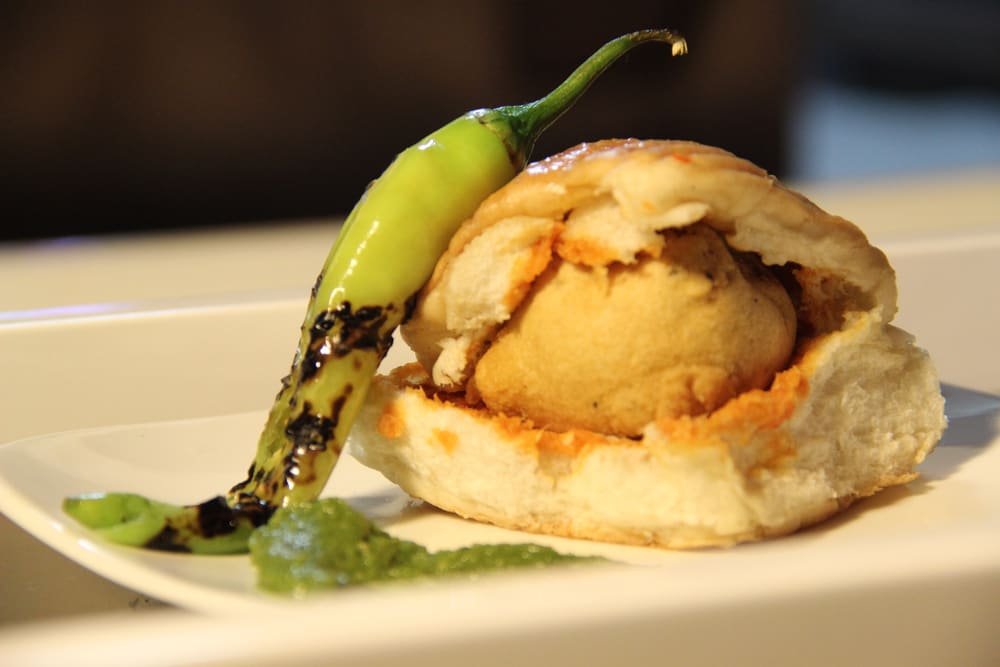
58. Eat a vada pav outside a station. A spiced potato fritter in a soft bun with chutneys and a fried green chilli: the city’s signature snack. Ashok Vada Pav near Kirti College in Dadar is the famous one. Our street food guide explains the rest.
59. Order extra butter at Cannon Pav Bhaji. The stall opposite CSMT has served pav bhaji since the 1970s, until 1 AM, and most people eat standing. Cannon Pav Bhaji
60. Have bun maska and chai in an Irani cafe. Few of the old cafes survive. Sassanian Boulangerie, baking since 1913, sells out of mawa cake by afternoon; Cafe Excelsior near CSMT does kheema pav; Cafe Military does berry pulav and a beer. Our Irani cafes guide has the rest.
61. Breakfast in Matunga. The city’s South Indian quarter has served idli and filter coffee for more than eighty years: Cafe Madras, open since 1940, and Ram Ashraya are where to start. Our Matunga guide has a breakfast trail.
62. Eat a banana-leaf thali. At Udipi Shri Krishna Boarding, a minute from Matunga Central, you buy a token at the door and are served rice, sambar, rasam, vegetables and payasam on a banana leaf, refilled until you stop.
63. Try an unlimited Gujarati thali. Steel plates of small bowls, refilled until you stop the waiter: Golden Star Thali near Charni Road station is one of the best-known. Our food culture guide explains who brought the thali to the city.
64. Go to Chembur for a Sindhi breakfast. In the old refugee camp, Vig Refreshments has served dal pakwan, crisp fried flatbread with chana dal, since its founder arrived from Pakistan after Partition. Our Chembur guide has the trail.
65. Eat prawns koliwada where it was invented. In Sion Koliwada, a Koli village resettled by Partition refugees, Hazara still serves the batter-fried prawns its founder named after the place. Cover your head and you may be offered langar at one of the neighbourhood’s gurdwaras. Our Sion guide tells the story.
66. Walk Mohammed Ali Road after dark. The lanes around Mohammed Ali Road and Bhendi Bazaar are where the city goes for kebabs, nihari, biryani and sweets, and during Ramzan the street becomes one long food market until dawn.
67. Eat Mumbai’s seafood. Butter garlic crab at Trishna in Kala Ghoda, Mangalorean seafood at Mahesh Lunch Home, open since 1977, or bombil fry, flattened and fried crisp, at Gajalee. Our food culture guide explains the Koli and Konkani kitchens behind them.
68. Have afternoon tea at the Taj. The Sea Lounge at the Taj Mahal Palace serves afternoon tea with a view of the Gateway and the harbour. Queues form, especially at weekends, so book ahead.
69. Watch the dabbawalas sort lunch. Every working day, around 5,000 dabbawalas carry home-cooked lunches across the city by bicycle, train and handcart. In the late morning you can watch the boxes being sorted on the pavement around Churchgate and other big stations.
Green Mumbai
70. Walk up to the Kanheri Caves. More than a hundred Buddhist caves cut into a basalt hillside inside Sanjay Gandhi National Park, used by monks for over a thousand years, best before 10 AM. The park is closed on Mondays. Sanjay Gandhi National Park and Kanheri Caves and our Green Mumbai itinerary
71. Watch the flamingos at Thane Creek. From about November to May, huge flocks feed on the creek mudflats. Boat rides from the Coastal and Marine Biodiversity Centre at Airoli, timed to the high tide, take you close; book ahead. The old Sewri viewing point has been disrupted by the Atal Setu works.
72. Walk the Maharashtra Nature Park. A 37-acre forest planted on a former garbage dump in Dharavi, with nature trails and dozens of species of butterfly, minutes from the glass towers of BKC.
73. Find the Mahakali Caves. Nineteen worn, unrestored Buddhist caves on a hill in Andheri East, carved between roughly the first century BCE and the sixth century CE, a short walk from a Metro Line 3 station. On a weekday morning you may have them almost to yourself.
74. Stroll round Powai Lake. An 1890s reservoir with a lakeside promenade, best early or at sunset; the crocodile warning signs are real. Walk on into the domed towers of Hiranandani Gardens, one of the few parts of the city easy to stroll in after dark. Powai Lake and our Powai guide
75. See Gilbert Hill. Near Andheri station, a 61-metre column of black basalt formed from lava about 66 million years ago, with two small temples on top. The steps were closed for repairs in 2019, so treat it as something to see from below.
City life
76. Ride a local train, outside rush hour. The trains are how the city moves, and a first-class ride in the middle of the day is an experience in itself. Avoid roughly 8 to 11 AM and 5 to 9 PM, and women travelling alone should use the ladies’ coaches. Our getting-around guide explains tickets.
77. Take the Aqua Line under the old city. Metro Line 3, fully open since October 2025, runs underground from the airport through BKC, Worli and Girgaon to Churchgate and Cuffe Parade. It is air-conditioned, calm and the quickest way between the airport and South Mumbai.
78. Ride the top deck of a red double-decker. BEST buses are extensive and very cheap, and the red double-deckers on the Fort routes are a pleasure in themselves. The Chalo app and Google Maps show routes and live locations.
79. Watch the cricket at Shivaji Park. The 28-acre maidan in Dadar is the cradle of Indian cricket, where Ramakant Achrekar coached Sachin Tendulkar. Dozens of matches and net sessions run at once, and around the edge you may see mallakhamb, gymnastics on a wooden pole.
80. Tour the Wankhede Stadium. The Test ground just behind Marine Drive has a cricket museum, and the Mumbai Cricket Association runs guided tours from Tuesday to Sunday, booked online through the District app.
81. Walk the inner track at the Mahalaxmi Racecourse. Laid out in 1883, with a grandstand modelled on Randwick in Sydney. Outside race days the public may walk or jog the inner track at set times morning and evening; the racing season runs from mid-November to April.
82. See the mill district reborn. The cotton mills of Lower Parel now hold offices, malls and restaurants: Phoenix Mills, founded in 1905, is a mall, and Kamala Mills is a compound of bars and restaurants in old mill buildings. Our Lower Parel guide has an evening there.
83. See Dharavi with a local guide. One of Asia’s largest informal settlements is also a hive of small industry: recycling, pottery, leather and bakeries. If you go, go on a walk that respects the people who live there. Reality Tours and Travel has a strict no-camera policy and says 80% of its post-tax profits go to its charity, Reality Gives.
After dark
84. Bar-hop in Bandra and Khar. The densest run of bars in the city, from smart cocktail rooms to small live-music venues such as antiSOCIAL in Khar, and karaoke nights in a lot of the bars. Our nightlife guide has the area by area.
85. Have a cocktail in Kamala Mills. The old mill compound in Lower Parel holds some of the city’s most talked-about bars, among them KOKO, for cocktails at a long teak bar, and The Bombay Cartel, an all-vegetarian bar. Note the exits when you walk into somewhere crowded.
86. Drink with a view. AER, on the 34th floor of the Four Seasons in Worli, and Dome, on the roof of the InterContinental on Marine Drive, look over the sea and the city at night.
87. Have a beer at Leopold Cafe. Leopold in Colaba, open since 1871, is loud, touristy and still worth a beer; Cafe Mondegar a few doors down has a jukebox and cartoon murals by Mario Miranda.
88. Eat after the bars close. Since October 2025, restaurants that do not serve alcohol may stay open around the clock. In the south, Ustaadi near Crawford Market serves Mughlai food until 4 AM and Flute 24 Hrs near Grant Road never closes; in the suburbs, Dadar Darbar is open all night.
With children
89. See the penguins at the Byculla Zoo. The Veermata Jijabai Bhosale Udyan, everyone’s Rani Baug, is an old botanical garden and zoo whose stars are its Humboldt penguins. It is closed on Wednesdays; go in the morning. Our family guide has more.
90. Push, spin and climb at the Nehru Science Centre. An outdoor park of hands-on exhibits in Worli, with galleries inside for older children, and a reliable choice for a rainy day. Nehru Science Centre
91. Let them run a city at KidZania. At R City Mall in Ghatkopar, children aged about 4 to 16 try more than a hundred jobs, from firefighter to pilot, and earn play money as they go. Plan on half a day.
92. Climb the Old Woman’s Shoe. In Kamala Nehru Park on Malabar Hill, small children can climb the shoe from the nursery rhyme while you look across the bay. The Paradox Museum of optical illusions, behind the Bombay Gymkhana, is a good follow-up in the heat of the day; our family guide has both.
Festivals and seasons
93. Follow Ganeshotsav. Ten days in late August or September of neighbourhood pandals and giant idols, ending with immersion processions to the sea; Lalbaugcha Raja draws the biggest queues. The first public celebration in the city began in a Girgaon chawl in 1893. Our Ganpati guide explains it.
94. Dance garba at Navratri. For nine nights in late September or October, the city’s grounds fill with garba and dandiya. Our Navratri guide lists where to go.
95. See the city lit for Diwali. Lamps, lanterns and rangoli across the city, the Deepotsav lights at Shivaji Park, and the faral sweets of the season. Our Diwali guide has the dates and places.
96. Walk Bandra’s lanes at Christmas. In December, Bandra’s old Catholic villages string lights across their lanes and set out cribs, and the churches fill for midnight Mass. Our Christmas guide has the walk.
97. Go to the Kala Ghoda Arts Festival. Nine days in February of installations, performances and street food in the art district, usually over the first two weekends.
98. Watch the monsoon waves on Marine Drive. From June to September, the waves come over the sea wall at high tide, which draws crowds of its own. Stay back from the edge, keep off the tetrapods, and check the weather warnings; the police close the promenade on rough days. Our when-to-visit guide explains the seasons.
Days out
99. Cross the harbour to Alibaug, or go up to Matheran. Alibaug is Mumbai’s weekend coast, an hour by catamaran from the Gateway, with Kolaba Fort standing in the sea; the ferries stop in the monsoon. Matheran is a hill station 800 metres up where no cars are allowed. Our Alibaug and Matheran guides have the details.
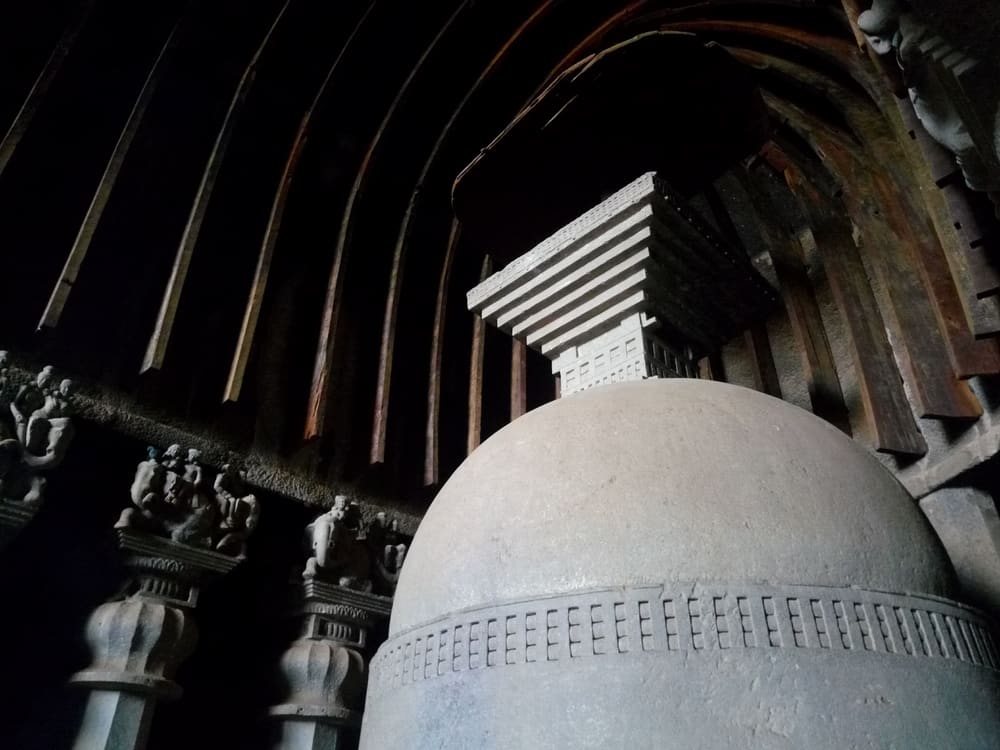
100. See the Karla Caves. A few kilometres from Lonavala, the great chaitya hall at Karla, cut around the 1st century BCE to the 1st century CE, is the largest and finest of its kind in India. Our Lonavala guide covers the trip, and our day trips guide compares it with Vasai Fort, Karnala and the rest.
Planning it
- Where to stay: South Mumbai keeps the classic sights close, Bandra suits food and nights out, and Juhu suits families. Our where-to-stay guide compares the areas.
- How long: three or four days covers the big sights and a few of the rest. Our Mumbai in a day and 48 hours itineraries are good starting points.
- When: October to February is the most comfortable; see our when-to-visit guide.
- On a budget: more than twenty of these are free; our free things guide lists them.
- Everything else: our Plan Your Trip page has arrivals, money, etiquette and getting around.
Sources
Most of the details above come from our own guides, linked in each entry, which list their sources. Additional sources:
- Reality Tours and Travel, Dharavi tours and its photography policy: https://realitytoursandtravel.com/city-tour/dharavi-tour-sightseeing/
- Lok Bhavan, Maharashtra, official site and visit booking: https://lokbhavan.maharashtra.gov.in/
- Al Jazeera on 30 years of DDLJ at Maratha Mandir, October 2025: https://www.aljazeera.com/news/2025/10/19/iconic-bollywood-romance-marks-30-years-of-non-stop-run-at-mumbai-theatre
Opening days, fees and timings change. Check the day before you go.
Header photo: Sunset over Haji Ali Dargah by Vyacheslav Argenberg, CC BY 4.0, via Wikimedia Commons.