Mumbai's Food Culture: The Communities Behind What the City Eats
Almost everyone in Mumbai came from somewhere else, and they brought their kitchens with them. That is the simplest way to understand the city’s food: not as one cuisine but as a dozen communities cooking side by side, each with its own neighbourhood, its own breakfast and its own institutions. This guide walks through them, with the places we list where you can taste each one.
The Kolis: the city’s first cooks
The Koli fishing communities were here before the city was, and their villages, or koliwadas, still sit inside it. Their food is seafood cooked simply and fiercely: bombil (Bombay duck), pomfret, prawns and crab. Walk to the koliwada at the end of Worli Sea Face to see the boats.
Mangalorean and Konkani coast cooking
From the coast south of the city came the seafood restaurants that made Fort famous: butter garlic crab, prawn ghee roast, neer dosa and fried fish. Mahesh Lunch Home has served Mangalorean seafood since 1977, and Trishna is the city’s best-known crab. Both are in Fort.
Maharashtrian food
The state’s own cooking is the source of vada pav and misal pav, and of a whole vegetarian repertoire that is harder to find in restaurants than it should be. The Girgaum Kitchen in Girgaon, the old Marathi heart of the city, cooks it well: kothimbir vadi, sukrunde and a daily Konkani thali. See our street food guide for vada pav and its rivals.
Gujarati and Marwari thalis
Gujarati and Marwari traders brought the unlimited vegetarian thali, served on a steel plate and refilled until you stop them. Shree Thaker Bhojanalay and Golden Star Thali, near Charni Road station, are two of the best-known, though Shree Thaker has been closed for repairs since August 2026, so check it has reopened before you go.
Udupi and South Indian
The Udupi restaurants of Matunga were built for the South Indian families who settled around King’s Circle, and they still serve some of the best dosas and filter coffee in the city: Ram Ashraya, Anand Bhavan and Sharda Bhavan among them. See all of them on our Matunga page.
Parsi and Irani
Parsi and Irani families gave the city its cafes: bentwood chairs, bun maska and Irani chai, kheema pav for breakfast and berry pulav for lunch. Far fewer survive than once did. Our guide to Irani cafes in Mumbai covers the best of them, from Cafe Military to Yazdani.
Mughlai and the food of Mohammed Ali Road
The Muslim neighbourhoods around Mohammed Ali Road and Bhendi Bazaar are where the city goes for kebabs, nihari and biryani, and at night during Ramzan the street becomes one long food market. Noor Mohammadi is the famous name, though the Maharashtra FDA suspended its food licence on 14 July 2026, so check it has reopened before you go. For biryani, see our guide to the best biryani in Mumbai.
The dabbawalas
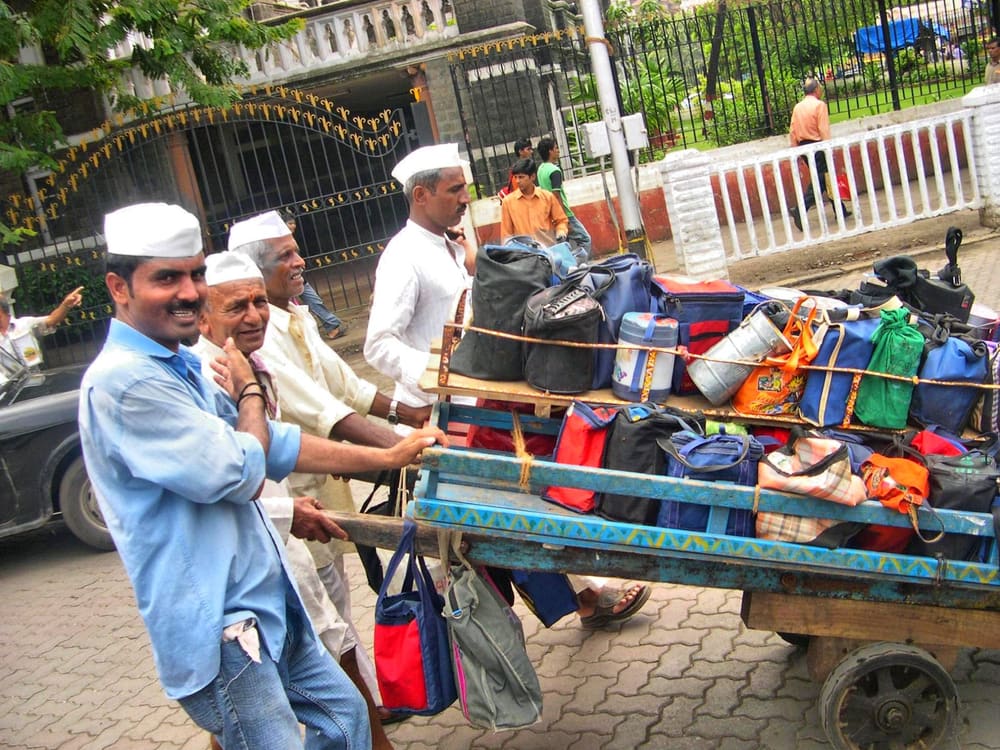
Since the late nineteenth century, Mumbai’s dabbawalas have carried home-cooked lunches from kitchens in the suburbs to offices in the city by local train, sorting tens of thousands of tiffin boxes with a system of painted codes, and returning the empty boxes the same afternoon. They are the clearest sign of how much this city cares about eating its own food.
Food and the festival calendar
The year’s food follows its festivals: modaks for Ganesh Chaturthi, fasting food during Navratri, and the night markets of Ramzan. Our guides to Ganpati and Navratri cover the festivals themselves.
The new Indian kitchens
The newest chapter is restaurants that take all of this seriously as cuisine: tasting menus built from regional Indian cooking and local ingredients, at places like Masque, Trèsind and Indian Accent. They are expensive, and they exist because of everything above.
Where to start
If you have one day to eat: misal pav for breakfast in Girgaon, a thali at lunch, kheema pav or a Mughlai dinner, and bhelpuri on Girgaon Chowpatty at sunset. Most of it costs very little.
Header photo: Dabbawalas in Mumbai by Joe Zachs, CC BY 2.0, via Wikimedia Commons.