Girgaon: A Neighbourhood Guide (2026)
Girgaon is the old Marathi heart of the island city, and the part of South Mumbai that still looks like the town that existed before the towers. Behind Girgaon Chowpatty and the top of Marine Drive lie chawls and wadis, temple lanes, sweet shops, a restored opera house and a hidden village of wooden houses. It is where public Ganeshotsav began in Mumbai, where the Gudi Padwa new year processions are at their most spirited, and where you can still eat Maharashtrian home food a few minutes from the sea.
There are few big sights here. Girgaon rewards slow walking, good manners and an appetite.
The short version
- Getting there: Charni Road on the Western line, five minutes on foot from the beach and the lanes. Metro Line 3 also has a Girgaon station.
- Time needed: half a day, ending at Chowpatty for sunset
- Best time: late afternoon into the evening. During Ganeshotsav, any time, and expect to walk.
- Good to know: the wadis and chawl lanes are people’s homes. Walk quietly, ask before photographing anyone, and keep out of courtyards unless invited.
A walk through Girgaon
This route runs from the opera house through the old lanes to the beach. It takes about three hours with food stops; start around 3 PM.
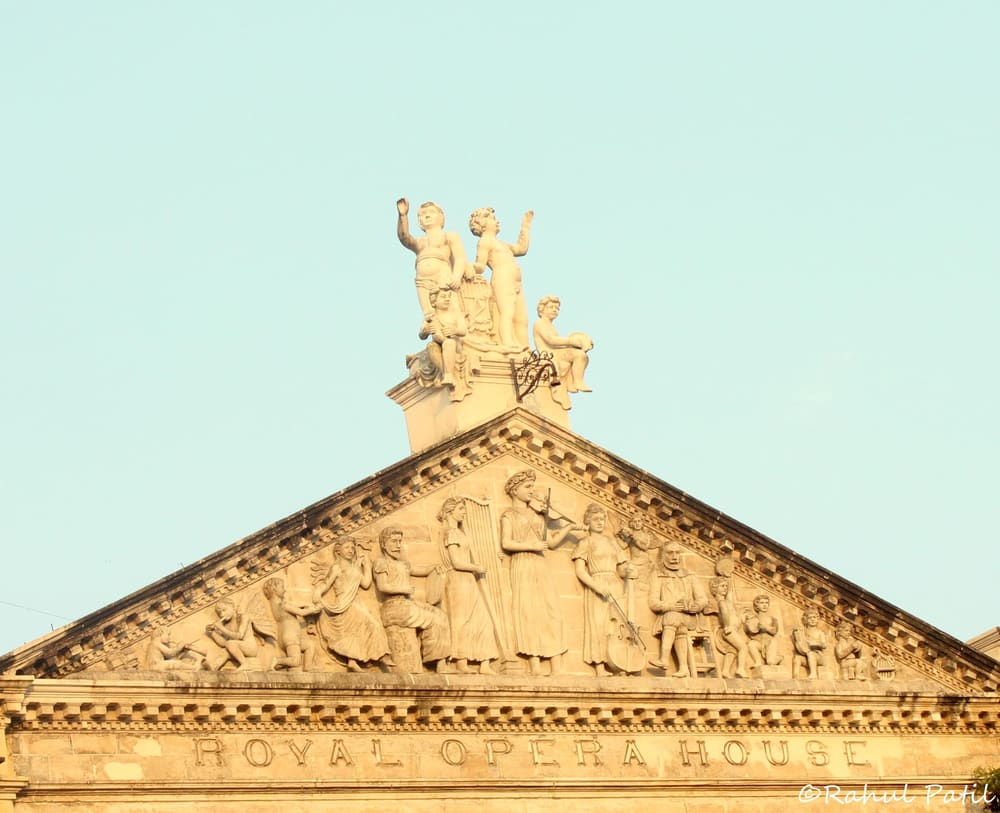
- The Royal Opera House. India’s only surviving opera house, inaugurated by King George V in 1911 and completed in 1912. It hosted plays, concerts and later films, closed in the 1990s, and reopened in October 2016 after a careful restoration that won a UNESCO Asia-Pacific heritage award the following year. It now hosts concerts, plays and talks; check what is on, because the inside is the reason to go.
- Khotachiwadi. A short walk away, tucked between the main roads, lies a heritage settlement founded in the late 18th century and sold in plots to East Indian Christian families. Its two-storey wooden houses, with verandahs, carved balconies and outside staircases, survive between new towers. This is a living village, not a museum: keep your voice down, stay on the lanes and ask before photographing homes or people.
- Lunch or a snack nearby. The Girgaum Kitchen, a small vegetarian kitchen on Khadilkar Road near Khotachiwadi, cooks the Maharashtrian and Konkani food Girgaon was built on, in a restored old cold-drink house.
- Keshavji Naik Chawl. In 1893, residents of this chawl in Girgaon started the first public Ganeshotsav in Mumbai, and Lokmanya Tilak spoke here in 1901. During the festival they still install a modest two-foot idol, a counterpoint to the giant ones elsewhere. Outside the festival, it is a reminder of how much of Mumbai’s public life started in lanes like these.
- Babulnath. Climb to the Shiva temple on its hillock at the foot of Malabar Hill, one of the oldest in the city and busiest on Mondays and during Shravan.
- Girgaon Chowpatty. End on the sand where Marine Drive’s promenade meets the beach. By evening it is a fairground of bhel, pav bhaji and kulfi stalls; go to the licensed food plaza and pick the busiest counter. Do not swim: the water is not clean. Walk south along Marine Drive as the lights come on.
If you have more time
- Mani Bhavan in Gamdevi, a short walk or taxi ride away, was Mahatma Gandhi’s Mumbai base for 17 years; his room is preserved with his spinning wheel.
- Hanging Gardens and Kamala Nehru Park, up Malabar Hill above Babulnath, have the best view of Marine Drive after dark.
Where to eat
Girgaon is mostly vegetarian, mostly cheap and very good.
- Maharashtrian: The Girgaum Kitchen, as above.
- Old Udupi: Raja Refreshments, opposite St Teresa’s Church, about six minutes from Charni Road station.
- A thali by the sea: Revival, a pure-vegetarian and Jain restaurant on the first floor overlooking Chowpatty, known for its Golden Thali served in kansa ware.
- Non-vegetarian and open late: Voice of India near Charni Road station, from kheema pav at 7:30 in the morning to Indian-Chinese at midnight.
- Pure Jain, any cuisine: All in 1 near Opera House cooks Gujarati, Asian and Mexican dishes to Jain rules.
- Sweets and Diwali faral: Panshikar, the Maharashtrian sweet shop, has a branch in Girgaon. Our Diwali guide has more.
See every restaurant we list on our Girgaon restaurants page.
When to come
- Ganeshotsav (August or September): Girgaon is at the centre of it, with mandals in every lane and the great processions heading to Chowpatty on the last day. Our Ganpati visarjan guide explains the day.
- Gudi Padwa (March or April): the Marathi new year, when Girgaon’s morning processions, with drummers, floats and people in traditional dress, fill the main road.
- Any evening: for Chowpatty and the sunset.
Practical notes
- Charni Road station has exits on both sides; the beach is on the west.
- Traffic. The main roads are narrow and crowded. Walk, or take a taxi only for the hill.
- Temples. Take your shoes off, dress modestly and carry little; Babulnath is busy at the weekly and festival peaks.
- Getting on. Marine Drive leads south to Churchgate and Fort, about 45 minutes’ walk along the sea.
Sources
- Wikipedia, Royal Opera House, Mumbai: https://en.wikipedia.org/wiki/Royal_Opera_House_(Mumbai)
- Wikipedia, Khotachiwadi: https://en.wikipedia.org/wiki/Khotachiwadi
- Wikipedia, Babulnath Temple: https://en.wikipedia.org/wiki/Babulnath
- MeMumbai on Keshavji Naik Chawl, Mumbai’s first public Ganeshotsav: https://memumbai.com/keshavji-naik-chawl-ganpati/
Header photo: The pediment of the Royal Opera House by Nicrahul, CC BY-SA 3.0, via Wikimedia Commons.