Colaba: A Neighbourhood Guide (2026)
Colaba is the southern tip of Mumbai and, for most visitors, the first part of the city they see. It was once a separate island, joined to the rest of Bombay by the causeway that still carries its main road. The Gateway of India and the Taj Mahal Palace hotel face the harbour here, the Elephanta ferries leave from the waterfront, and behind them run a kilometre of pavement stalls, some of the city’s oldest cafes and bars, a working fish dock and, at the far end, a Victorian church built for soldiers who never came home.
It is touristy in places and proud of it, and it rewards anyone who walks a few streets back from the main road.
The short version
- Getting there: Colaba has no station of its own. Take the train to Churchgate or CSMT, or Metro Line 3 to Cuffe Parade or Hutatma Chowk, then a short taxi or a 20 to 25-minute walk.
- Time needed: Half a day; a full day with the Elephanta ferry
- Best time: Early morning at the Gateway and the docks, before the heat and the crowds. Late afternoon into the evening for the Causeway.
- Good to know: Prices on the Causeway are asked, not fixed. Do not photograph naval buildings or anything guarded; much of the southern end is a naval area.
A walk through Colaba
- Regal Cinema. Start at the Art Deco corner where Colaba begins. Regal, opened in 1933, was one of the city’s first Art Deco cinemas.
- Colaba Causeway. Walk south along the pavement market: scarves, silver jewellery, sandals, brass, books and everything else, backed by old shops and cafes. Leopold Cafe and Cafe Mondegar, with its cartoon murals by Mario Miranda, have been fixtures for generations.
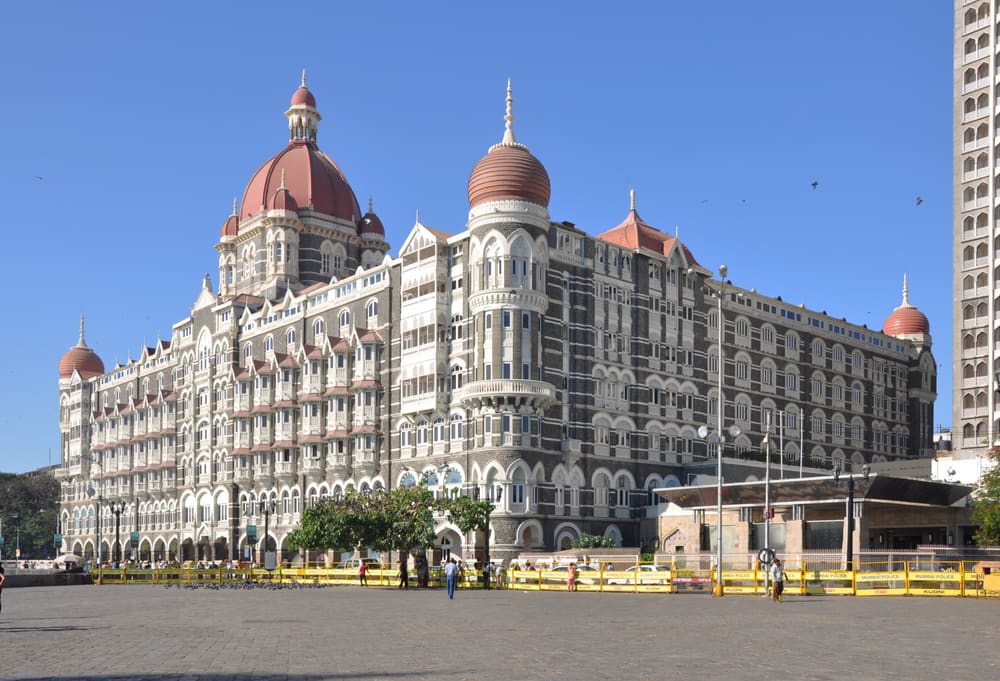
- The Gateway of India. Turn left towards the water. The basalt arch was built to mark the 1911 visit of King George V and Queen Mary and completed in 1924; in 1948 the last British troops left India through it. Opposite stands the Taj Mahal Palace, opened in 1903, its domes as much a landmark as the Gateway itself.
- The waterfront. Walk the promenade along Apollo Bunder for the harbour, the ferries and the naval ships at anchor. If you have half a day spare, this is where the boats leave for Elephanta, about an hour each way.
- The back streets. Head inland through the lanes behind the Taj, where small restaurants have fed sailors, taxi drivers and travellers for decades, then rejoin the Causeway further south.
- Sassoon Docks. Built in 1875, the first wet dock in Bombay is still one of the city’s biggest fish markets. It is at its most alive soon after dawn, when the boats unload and the Koli fisherwomen auction the catch. Wear shoes you can wash, keep out of the way of the porters, and keep your camera away: photography is not allowed.
- The Afghan Church. At the southern end of Colaba stands the Church of St John the Evangelist, built between 1847 and 1858 to commemorate the dead of the First Afghan War and the retreat from Kabul. Its tall Gothic spire, stained glass and memorial tablets are worth the walk. Beyond it the area becomes Navy Nagar, a restricted naval zone.
Where to eat and drink
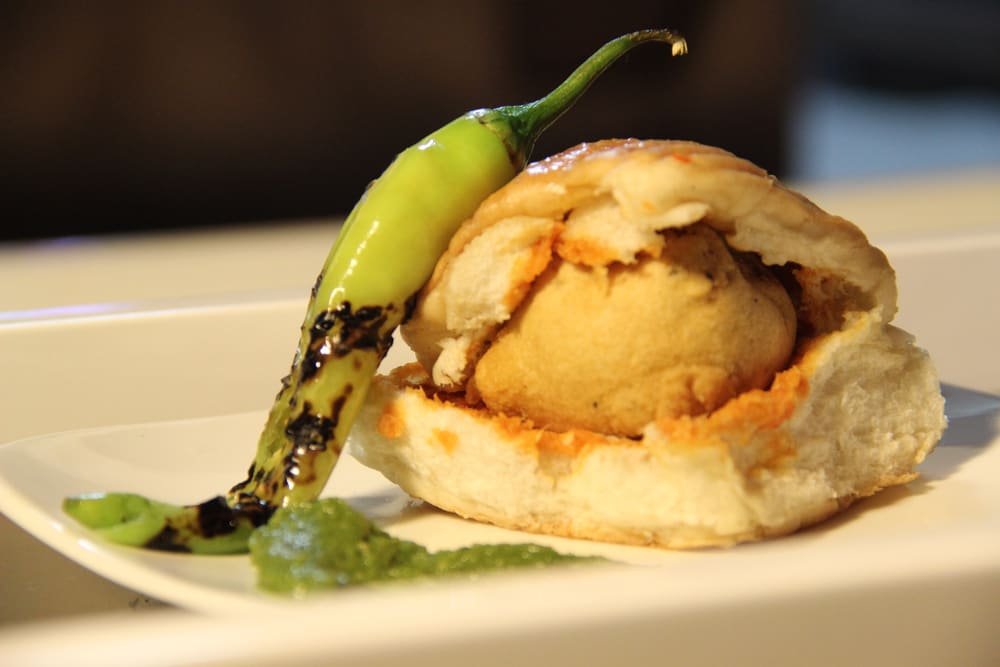
- Irani and old Bombay: Olympia Coffee House, a century-old room across from Leopold, for kheema pav and Mughlai dishes at small prices, and Bagdadi, a plain Mughlai canteen behind the Taj that serves from early morning to after midnight.
- A small surprise: Cafe Churchill, four or five tables on the Causeway doing continental food far better than the room suggests.
- Afternoon tea: the Sea Lounge at the Taj Mahal Palace serves afternoon tea with a view of the Gateway and the harbour. Queues form, especially at weekends, so book ahead.
- A big night out: the restaurants inside the Taj, including Wasabi by Morimoto.
See every restaurant we list in the area on our Colaba restaurants page, and the Irani cafes guide for more of the old cafes.
Shopping
The Causeway stalls are for bargaining: decide what something is worth to you before you ask the price, offer well under the first figure and be ready to walk away. For crafts, textiles and gifts at fixed prices, Good Earth next to the Taj and the design stores of neighbouring Kala Ghoda are the calmer alternative; our shopping guide has more. Our money guide has more on bargaining.
Evenings
The Gateway is lit up after dark and fills with families, photographers and balloon sellers. The old bars of the Causeway are busy every night, and Marine Drive, a short taxi ride north, is the classic place to watch the sunset and the lights come on along the Queen’s Necklace.
Practical notes
- Security. There is security screening at the Gateway, and large bags are not allowed in the monument area.
- Pickpockets. The Causeway is crowded and the stalls are a distraction. Keep your phone and wallet in front pockets.
- Touts. Buy Elephanta ferry tickets at the official booth, and ignore anyone offering “special” boat rides or tours on the promenade.
- Getting on. Fort and Kala Ghoda, with the museum, the galleries and the Victorian buildings, start ten minutes’ walk north.
Sources
- Wikipedia, Taj Mahal Palace Hotel: https://en.wikipedia.org/wiki/Taj_Mahal_Palace_Hotel
- Wikipedia, Sassoon Docks: https://en.wikipedia.org/wiki/Sassoon_Docks
- Wikipedia, Afghan Church: https://en.wikipedia.org/wiki/Afghan_Church
- Wikipedia, Leopold Cafe: https://en.wikipedia.org/wiki/Leopold_Cafe
Header photo: The Taj Mahal Palace, Colaba by Joe Ravi, CC BY-SA 3.0, via Wikimedia Commons.