Day Trips from Mumbai (2026): Caves, Forts, Hill Stations and the Coast
Mumbai is hemmed in by the sea on one side and the hills of the Sahyadri on the other, and within two or three hours of the city you can be in a 2,000-year-old Buddhist cave, on a car-free hill station, on a beach across the harbour or on the ramparts of a Portuguese fort. This guide covers the seven trips that work best as a day out, with how to get there by train, boat or road, what it costs, and the season that suits each one.
At a glance
| Trip | Best for | Getting there | Time each way | Closed |
|---|---|---|---|---|
| Elephanta Caves | Rock-cut temples and a harbour boat ride | Ferry from the Gateway of India | About 1 hour | Mondays |
| Kanheri Caves | Buddhist caves in a forest, without leaving the city | Train to Borivali, then the park bus | 1 to 1.5 hours | Mondays |
| Vasai Fort | Portuguese ruins, quiet and free | Train to Vasai Road, then a bus or auto | About 1.5 hours | |
| Alibaug | Beaches and a sea fort | Ferry to Mandwa, then the included bus | About 2 hours | Ferries stop in the monsoon |
| Lonavala and the Karla Caves | Hills, viewpoints and the finest chaitya hall in India | Express train or the Mumbai–Pune Expressway | 2 to 2.5 hours | |
| Matheran | A hill station with no cars | Local train to Neral, then taxi and walk, or the toy train | 2.5 to 3 hours | |
| Karnala | Birds, forest and a fort climb | By road via Panvel | About 1.5 hours |
Elephanta Caves
The cave temples on Gharapuri island, carved between the 5th and 8th centuries, are a UNESCO World Heritage Site and the obvious first day trip. The main cave is a cool, pillared hall dominated by the six-metre Trimurti, a three-headed image of Lord Shiva that is among the finest sculptures in India. The boat across the harbour, past the docks and the naval ships, is half the experience. Our Elephanta guide has the full details.
- Getting there: ferries leave the Gateway of India from about 9 AM, roughly every half hour until early afternoon, and take about an hour. The last boat back leaves the island at around 5:30 PM. A return ticket costs a few hundred rupees; buy it at the official booth, not from touts.
- On the island: a short toy train covers the flat stretch from the jetty, then about 120 steps lead up to the caves, lined with stalls. The Archaeological Survey of India ticket is about ₹40 for Indian visitors and ₹600 for foreign visitors.
- Know before you go: the caves and the ferries are closed on Mondays. Since a ferry collision in December 2024, wearing a life jacket is compulsory on boats from the Gateway; put it on. Monkeys snatch food and bottles.
- Allow: half a day. Take the first boat to beat the heat and the crowds.
Kanheri Caves
More than a hundred Buddhist caves cut into a basalt hillside, used by monks from around the 1st century BCE for over a thousand years, inside Sanjay Gandhi National Park. It is the closest thing to a day in the hills without leaving the city: forest, monkeys, a great chaitya hall with carved Buddhas, and views across Mumbai from the upper caves.
- Getting there: Western line to Borivali, then a 15-minute walk to the park’s main gate. Kanheri is about 6 km inside; a park bus runs to the caves, or you can hire a bicycle at the gate.
- Tickets: park entry (about ₹85 for adults), plus the cave ticket of about ₹25 for Indian visitors and ₹300 for foreign visitors.
- Know before you go: the park is closed on Mondays. Food inside is limited, so carry water.
- Allow: half a day. The caves face east and are at their best before 10 AM.
Vasai Fort
The ruins of Bassein, the Portuguese fort town north of Mumbai, built from the 1530s and taken by the Marathas in 1739. Inside the walls are the shells of churches, a cathedral and a Franciscan monastery, overgrown with banyan trees and almost empty on a weekday. It is free, atmospheric and one of the least crowded trips on this list.
- Getting there: Western line to Vasai Road, about an hour from Dadar, then a municipal bus or an auto for the 10 km to the fort.
- Know before you go: there is no ticket, but there are no facilities either: take water and wear proper shoes for uneven stone. Go in daylight, and in a group if you can; parts of the site are isolated.
- Allow: half a day.
Alibaug
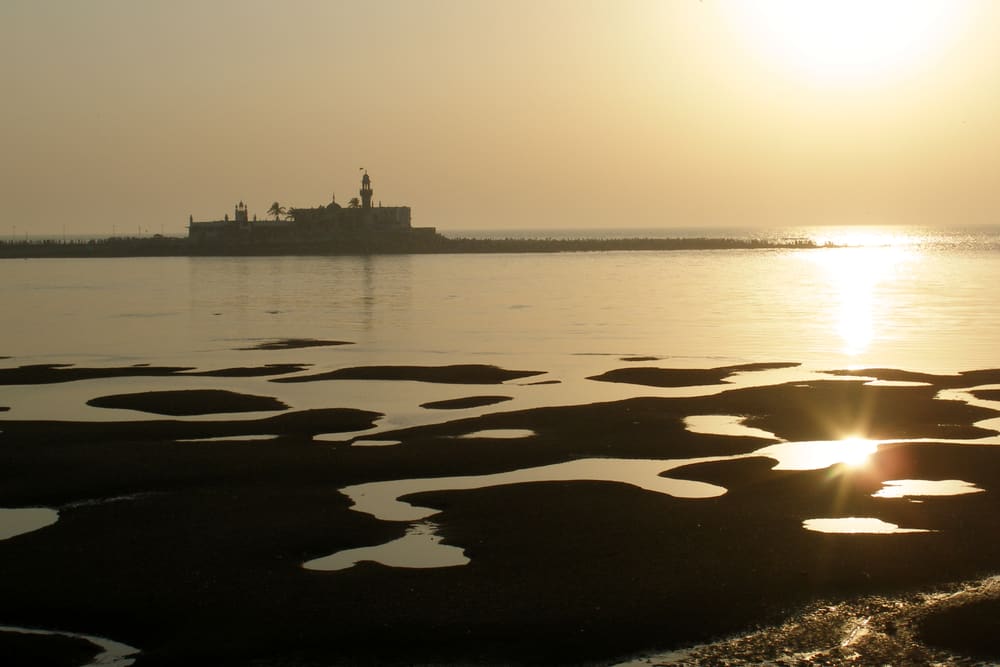
Across the harbour from the Gateway, Alibaug is Mumbai’s weekend coast: casuarina-lined beaches at Kihim, Nagaon and Varsoli, fish thalis, and the 17th-century Kolaba Fort standing in the sea just off Alibaug beach, which you can walk out to at low tide. It is possible as a day trip, but it is better as one night.
- By ferry: catamarans run by PNP, Maldar and Ajanta leave the Gateway of India for Mandwa jetty, taking about an hour, and the fare includes a bus from Mandwa to Alibaug town, about half an hour more. The M2M Ro-Ro ferry from Ferry Wharf (Bhaucha Dhakka) in Mazgaon also carries cars.
- By road: the Atal Setu sea bridge has made the drive much quicker, roughly two hours from South Mumbai depending on traffic.
- Know before you go: the Gateway ferries stop for the monsoon, roughly from late May to the end of August, and can be cancelled in rough weather either side of that. Life jackets are compulsory. Check Kolaba Fort’s tide times before you set off across the sand, and come back well before the water returns.
- Allow: a long day, or better, a night. Our full Alibaug guide covers the beaches, forts and trips further south.
Lonavala and the Karla Caves
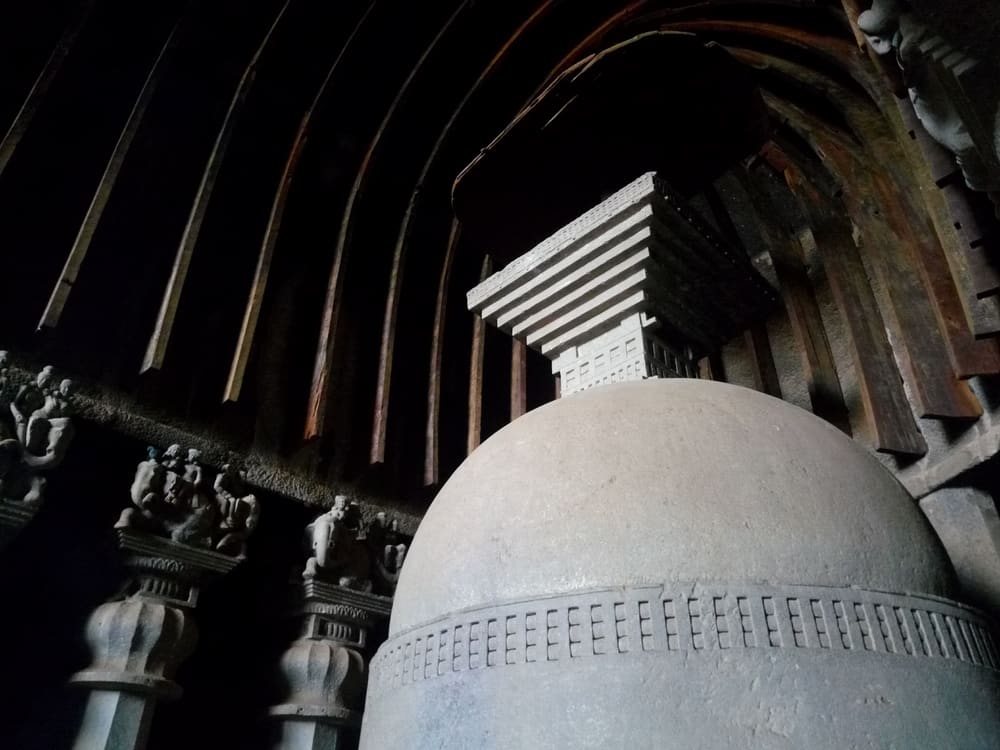
Lonavala is the hill station on the road to Pune, famous for chikki, monsoon waterfalls and weekend crowds. The real reason to come is a few kilometres east: the Karla Caves, whose great chaitya hall, cut around the 1st century BCE to 1st century CE, is the largest and finest of its kind in India, with a timber-ribbed vault and carved couples on the facade. The older and quieter Bhaja Caves are across the valley.
- Getting there: several express trains a day from CSMT and Dadar reach Lonavala in about two to two and a half hours; check times on the RailOne app. By road, the Mumbai–Pune Expressway takes about the same. Karla is about 11 km from Lonavala by auto or taxi.
- Tickets: the Karla and Bhaja caves each charge about ₹25 for Indian visitors and ₹300 for foreign visitors. Karla is a steep climb of a few hundred steps, past the busy Ekvira temple at the top.
- Know before you go: in the monsoon, the Pune district administration restricts entry into the water at Bhushi Dam and other waterfalls and dams around Lonavala, after people drowned there in 2024. Respect the barriers. Weekends are very crowded from June to September.
- Allow: a full day. Our Lonavala guide covers the caves, the forts and the monsoon rules in detail.
Matheran
A hill station 800 metres up where cars, autos and motorbikes are not allowed: you walk, ride a horse or take a small electric rickshaw along red-earth paths through forest to viewpoints with names like Louisa Point and Panorama Point. It is a world away from Mumbai and only a couple of hours from it.
- Getting there: a Karjat-bound local train from CSMT or Dadar to Neral, about two hours, then a shared taxi up the ghat to the Dasturi car park, where vehicles stop and you pay a small entry fee. From Dasturi it is about 2.5 km into town on foot, on horseback, by e-rickshaw or by the toy-train shuttle from Aman Lodge. Hand-pulled rickshaws were banned by the Supreme Court in 2025, and e-rickshaw service has been patchy in 2026, so be ready to walk.
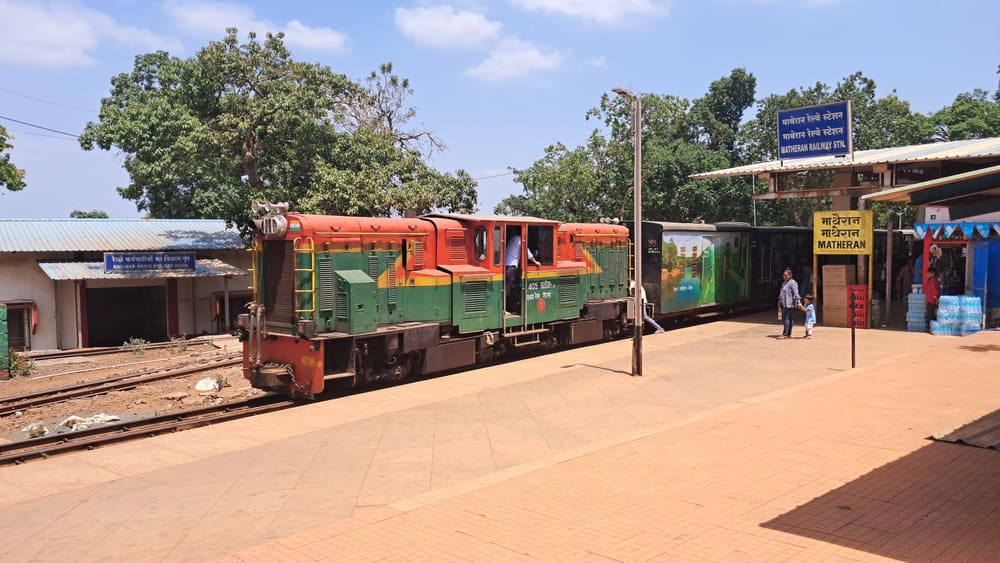
- The toy train: the narrow-gauge Neral–Matheran railway is the romantic way up, about two and a half hours of switchbacks. Central Railway suspends the full Neral–Matheran service every monsoon; in 2026 it is off until 15 October, while the short Aman Lodge–Matheran shuttle keeps running. Book or check timings before you rely on it.
- Know before you go: wear shoes that can handle dust and mud, and carry cash. The monkeys are bold.
- Allow: a full day, starting early. An overnight stay lets you see sunrise from the points before the day-trippers arrive. Our full Matheran guide has more.
Karnala Bird Sanctuary
A forested hill off the Mumbai–Goa highway near Panvel, with a birding trail and Karnala Fort on top, whose thumb-shaped rock pinnacle you can see from the road. Birders come for the winter migrants, and in the monsoon for resident forest species.
- Getting there: by road via Panvel, about one and a half hours from central Mumbai depending on traffic. Panvel is the nearest railway station, about 13 km away.
- Know before you go: the fort climb takes a few hours there and back and is steep in places. Start by 7 or 8 AM, before the heat, and carry plenty of water. The rock path gets slippery in the monsoon. There is a small entry fee.
- Allow: half a day to a full day.
Which one to choose
- Only one day and no car: Elephanta, then the evening in Colaba.
- History without the crowds: Vasai Fort on a weekday, or Kanheri early in the morning.
- The most impressive single sight: the Karla chaitya hall.
- A break from traffic and noise: Matheran.
- A beach: Alibaug, outside the monsoon.
- With young children: Elephanta (the boat is the highlight) or Kanheri, which has buses and shade; avoid the long climbs at Karla and Karnala.
Practical notes
- Seasons. October to February is the best time for almost everything on this list. The monsoon, June to September, makes the hills spectacular but brings ferry suspensions, slippery paths and rules at waterfalls. March to May is hot; go early and finish by lunch.
- Weekends. Lonavala, Alibaug and Matheran are packed on weekends and holidays. Go midweek if you can.
- Trains. Avoid the morning rush into the city and the evening rush out. Leaving Mumbai early is easy; coming back at 6 PM is not. Our guide to getting around Mumbai explains the lines and tickets.
- Money. Carry cash for autos, entry fees and stalls; card machines are rare outside the city.
Sources
- Central Railway on the 2026 monsoon suspension of the Neral–Matheran toy train: https://x.com/Central_Railway/status/2066000172870758644
- India TV on compulsory life jackets for boats from the Gateway of India, 19 December 2024: https://www.indiatvnews.com/maharashtra/mumbai-boat-accident-life-jackets-now-mandatory-for-ferry-rides-from-gateway-of-india-latest-updates-2024-12-19-967021
- Prahaar on the 2026 monsoon closure of the Gateway–Mandwa ferries, 15 May 2026: https://prahaar.in/2026/05/15/gateway-to-mandwa-ferry-service-will-remain-closed-for-monsoon-mumbai-to-alibaug-travel-update-2026/
- The Tribune on the prohibitory orders at Lonavala picnic spots after the 2024 Bhushi Dam drownings: https://www.tribuneindia.com/news/india/after-lonavala-waterfall-tragedy-prohibitory-orders-imposed-at-picnic-spots-in-maharashtras-pune-636329
Entry fees, ferry fares and train times change. Treat the prices here as a guide and check the day before you go.
Header photo: Matheran Hill Railway train at Matheran station by Historical Trains, released into the public domain (CC0), via Wikimedia Commons.