Mumbai's Hidden Gems: Places Most Visitors Miss, and Bollywood Beyond the Tour Bus
Every list of things to do in Mumbai starts with the Gateway, Marine Drive and Colaba Causeway, and they deserve their place. But the city people love when they live here is mostly elsewhere: in a temple tank older than the city, a village of wooden houses hidden between towers, a cow shelter in the middle of a bazaar, a cinema that has shown the same film every day for thirty years. This is a list of those places, chosen because they are genuinely worth the trip, followed by a section on Bollywood for people who want more than a tour bus.
Most are free or nearly free. Many are best early in the morning.
In the old city
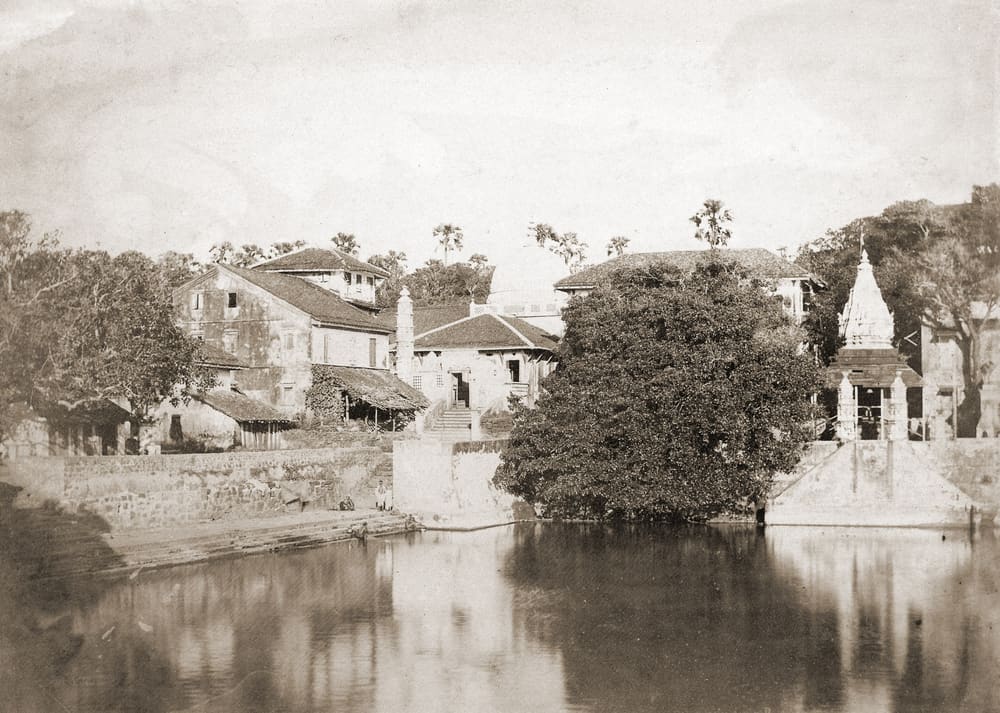
Banganga Tank, Walkeshwar. At the tip of Malabar Hill, below the mansions, is a rectangular stone tank surrounded by steps, small temples and old houses. It was built in 1127 by a minister of the Silhara kings, rebuilt in 1715, and is said to mark the spot where Lakshman shot an arrow into the ground to bring up water for Lord Rama. It is calm at almost any hour, and the setting for a lamp-lit festival on Tripurari Purnima; see our Diwali guide. The Hanging Gardens are ten minutes uphill.
Lok Bhavan at sunrise. The Governor of Maharashtra’s residence on Malabar Point, renamed Lok Bhavan from Raj Bhavan in December 2025, is set in about 20 hectares of forest, lawns and beach on three sides of the sea. Small groups are taken round early in the morning to see the sunrise and the British-era underground bunker. Visits must be booked online, through the official Lok Bhavan website, and fill up weeks ahead; carry ID.
Khotachiwadi, Girgaon. A settlement of two-storey wooden houses with verandahs, carved balconies and outside staircases, founded in the late 18th century and still lived in by East Indian Christian families, between the high-rises of Girgaon. Walk quietly; these are homes. Our Girgaon guide has a walk that includes it.
Bombay Panjrapole, Bhuleshwar. Deep in the bazaar lanes is an animal shelter founded in 1834 by Jamsetjee Jeejeebhoy and Amichand Shah, now home to hundreds of cows, along with goats, donkeys and birds. Visitors can wander in during the day and, for a small donation, feed the cows greens. It is one of the strangest and most peaceful places in the city.
The dabbawalas. Every working day, around 5,000 dabbawalas carry up to 200,000 home-cooked lunches from homes to offices across the city, by bicycle, train and handcart, and bring the empty boxes back in the afternoon. You can watch the system at work in the late morning around Churchgate and other big stations, as the boxes are sorted on the pavement. It stops for a few days each March, when the dabbawalas go home for their village festival.
The Blue Synagogue, Kala Ghoda. Keneseth Eliyahoo, completed in 1884 by the Sassoon family, is painted a startling turquoise and is beautiful inside. It is open to visitors on weekdays. Our Fort and Kala Ghoda guide has more on the area.
Sassoon Dock at dawn. Colaba’s fishing dock comes alive from about 5 AM as Koli fisherwomen sort and auction the night’s catch. It is loud, wet and fishy, and wonderful. Wear shoes you do not mind ruining, keep out of the way of anyone working, and ask before taking photographs, since rules on photography near the docks vary. Our Colaba guide covers the area.
Further out
Flamingos at Thane Creek. From about November to May, huge flocks of lesser and greater flamingos feed on the mudflats of Thane Creek. Boat rides from the Coastal and Marine Biodiversity Centre at Airoli, timed to the high tide, take you close; they cost around ₹500 per person and must be booked ahead. The old viewing point at Sewri has been disrupted by the Atal Setu works, so Airoli is now the place to go.
Maharashtra Nature Park, Dharavi. A 37-acre forest planted on a former garbage dump, with nature trails and dozens of species of butterfly, minutes from the glass towers of BKC. See our BKC guide.
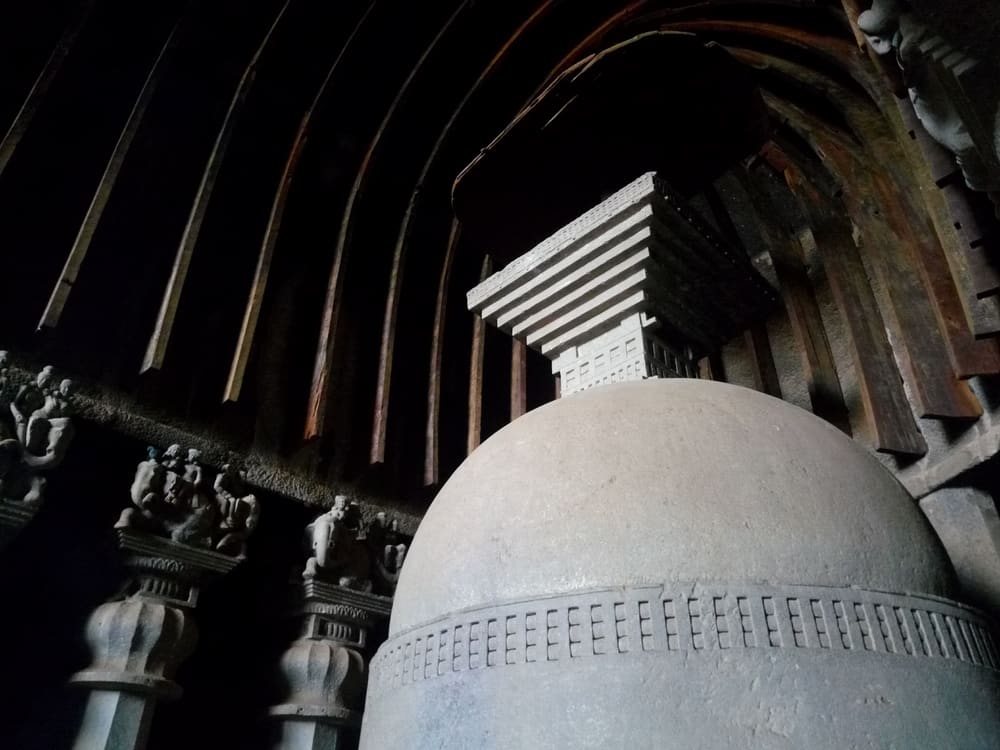
The Mahakali and Kanheri caves. Buddhist caves cut into the hills of the suburbs nearly two thousand years ago: the Mahakali Caves in Andheri, a short walk from a Metro Line 3 station, and the larger Kanheri Caves inside the national park. Our Andheri guide covers Mahakali.
Kumbharwada, Dharavi. The potters’ quarter on 90 Feet Road, settled by potters from Gujarat generations ago, where clay lamps dry in the lanes before Diwali. Go in daylight and ask before photographing people at work.
Khar Danda and Versova. Two Koli fishing villages that predate the suburbs around them, with painted boats and fish drying in the sun. See our Khar and Andheri guides.
The Marve to Manori ferry. A five-minute crossing of the creek for a few rupees, to a village with its own beach. Our Malad guide explains how.
Eat like a local
The food most visitors miss is the everyday food of particular communities, in the neighbourhoods where they settled:
- A South Indian breakfast in Matunga, in cafes that have served the same idli and coffee for more than eighty years. See our Matunga guide.
- A Sindhi breakfast in Chembur, dal pakwan in the old refugee camp. See our Chembur guide.
- Prawns koliwada in Sion Koliwada, where the dish was invented. See our Sion guide.
- An Irani cafe that has barely changed in a century. See our Irani cafes guide.
Bollywood without the tour bus
DDLJ at Maratha Mandir. The single-screen Maratha Mandir cinema, near Mumbai Central, has shown Dilwale Dulhania Le Jayenge every day since the film was released on 20 October 1995, at a late-morning show. Tickets are cheap, the audience still whistles at the songs, and it is the best two-and-a-half hours of Bollywood in the city.
A film at Regal. The Art Deco Regal Cinema at the top of Colaba Causeway has been showing films since 1933. Seeing a new Hindi release in a big single-screen hall, with a crowd that cheers the hero’s entrance, is a different experience from a multiplex.
Prithvi Theatre, Juhu. Founded by the Kapoor family in 1978 in memory of Prithviraj Kapoor’s touring company, it is the heart of Mumbai’s theatre scene, with a much-loved cafe in the garden. There are performances every day except Monday. See our Juhu guide.
Film City tours. Private operators run tours of Film City in Goregaon, the government studio complex, from about ₹500: you see sets, a dance show and sometimes a shoot from a distance. Go for the sets, not to meet stars.
Stars’ homes. Fans gather outside the bungalows on Bandstand and in Juhu on birthdays and festivals. Shah Rukh Khan’s Mannat on Bandstand has been under renovation since 2025, with the family living elsewhere. Stand on the promenade like everyone else, and do not try to get closer.
Sources
- Wikipedia, Banganga Tank: https://en.wikipedia.org/wiki/Banganga_Tank
- Lok Bhavan, Maharashtra, official site and visit booking: https://lokbhavan.maharashtra.gov.in/
- Deccan Herald on the renaming of Raj Bhavan as Lok Bhavan: https://www.deccanherald.com/india/maharashtra/maharashtra-raj-bhavan-officially-renamed-as-maharashtra-lok-bhavan-3817520
- Wikipedia, Khotachiwadi: https://en.wikipedia.org/wiki/Khotachiwadi
- Scroll on the Bombay Panjrapole: https://scroll.in/article/703410/what-maharashtra-can-learn-from-mumbais-oldest-animal-shelter-it-isnt-just-cows-that-need-help
- Wikipedia, Dabbawala: https://en.wikipedia.org/wiki/Dabbawala
- Wikipedia, Knesset Eliyahoo Synagogue: https://en.wikipedia.org/wiki/Knesset_Eliyahoo_Synagogue
- Lonely Planet on Sassoon Docks: https://www.lonelyplanet.com/india/mumbai-bombay/attractions/sassoon-docks/a/poi-sig/1360740/356405
- LBB on the flamingo boat rides at Thane Creek: https://lbb.in/mumbai/flamingo-sanctuary/
- Wikipedia, Sewri Flamingo Point: https://en.wikipedia.org/wiki/Sewri_Flamingo_Point_Bombay
- Al Jazeera on 30 years of DDLJ at Maratha Mandir, October 2025: https://www.aljazeera.com/news/2025/10/19/iconic-bollywood-romance-marks-30-years-of-non-stop-run-at-mumbai-theatre
- Wikipedia, Regal Cinema: https://en.wikipedia.org/wiki/Regal_Cinema
- Wikipedia, Prithvi Theatre: https://en.wikipedia.org/wiki/Prithvi_Theatre
- India TV on the Mannat renovation, July 2026: https://www.indiatvnews.com/entertainment/news/shah-rukh-khan-gets-relief-from-supreme-court-as-plea-against-mannat-renovation-gets-dismissed-2026-07-14-1048194
Header photo: Banganga Tank and the Walkeshwar Temple, about 1855 by Johnson and Henderson, public domain, via Wikimedia Commons.