Where to Stay in Mumbai: Choosing an Area (2026)
Mumbai is long and thin, and the traffic is real, so where you sleep decides how much of your trip you spend in a car. This guide is about choosing the area, not the hotel: what each part of the city is like to come back to at night, how far it is from the sights and the airport, what rooms roughly cost, and the rules at check-in that catch visitors out. We do not list hotels or take booking commissions, so nothing here is paid for.
The short version
- First visit, mainly sightseeing: Colaba or the Fort. Most of the famous sights are a walk away, and the metro now runs from here to the airport.
- Food, cafes and nightlife: Bandra West. It is in the middle of the city, half an hour or so from the airport, and has more places to eat and drink per street than anywhere else.
- A night or two between flights: Andheri East near Terminal 2, or the transit hotel inside the terminal.
- A beach and the airport close by: Juhu.
- Work or an event at Jio World Centre: Bandra Kurla Complex (BKC).
- Tight budget: a guesthouse in Colaba, or Dadar, the most central place in the city for trains.
- Flying from Navi Mumbai airport (NMI) early in the morning: a hotel on the Navi Mumbai side, because the drive from the city is an hour or more.
First, how the city is laid out
Picture Mumbai as a peninsula about 60 km long with the old city at the southern tip. Colaba, the Fort and Marine Drive are at the bottom; Worli, Lower Parel and Dadar are in the middle; Bandra, Juhu, Andheri and Powai are the northern suburbs, and the main airport (BOM) sits among them, about 25 km from Colaba. The second airport, NMI, is across the harbour to the east.
So the real choice is which end to sleep at. Stay in the south and the sights are on your doorstep but the suburbs are a long ride away; stay in the suburbs and the airport and the nightlife are close but every day of sightseeing starts with a journey south.
Two things have made that choice easier. Metro Line 3, the underground Aqua Line, has run the whole way from the airport’s Terminal 2 to Churchgate and Cuffe Parade since October 2025, so the airport-to-south trip no longer depends on traffic, as long as you travel before about 10:30 PM. And the Coastal Road and the Bandra–Worli Sea Link now carry cars from Marine Drive to Bandra in well under half an hour outside rush hour. Our getting-around guide explains both.
Even so, if you only have two or three days and want to see the old city, staying in the south saves the most time.
Area by area
Colaba
Good for: first-timers, walking, budget travellers, people who want to be among other visitors.
The Gateway of India, the Taj, the Causeway market, the museums and the galleries of Kala Ghoda are all within a short walk, and the Elephanta ferries leave from here. Colaba has the widest range of rooms in the city, from the grand hotels on the waterfront to simple guesthouses on the side streets, and it is busy and lit until late, which is why so many solo travellers start here.
Worth knowing: some of the cheaper guesthouses are a floor or two up in old buildings, reached by a small lift or the stairs, with compact rooms; ask before booking if you have heavy bags or difficulty with steps. Colaba is about as far from the airport as you can get: allow 45 minutes by road at night and well over an hour at rush hour, or take the metro from Cuffe Parade or Churchgate. Bandra’s bars are 40 minutes to an hour away by cab. Our Colaba guide covers the area in detail.
Fort, Churchgate and Marine Drive
Good for: architecture, trains, sea views, business in the old city.
The Fort is the Victorian and Art Deco heart of Mumbai, with CSMT and Churchgate stations at either side and Irani cafes on the corners. Marine Drive, just west, has a row of older hotels facing the sea, and a room looking over the bay at sunset is one of the city’s great views. Both are well placed for the metro, the local trains, Wankhede Stadium and the offices at Nariman Point.
Worth knowing: the Fort is an office district, so it is quiet late at night and on Sundays, pleasantly so for some people and too quiet for others. Read our guides to the Fort and Kala Ghoda and Marine Drive.
Worli and Lower Parel
Good for: big modern hotels, nightlife, splitting the difference between south and north.
These old mill districts are now towers, malls and some of the city’s best restaurants and bars, which is why many of the newest luxury hotels are here. From Worli you can reach the south in about 20 minutes on the Coastal Road and Bandra in ten over the Sea Link, and Metro Line 3 stops at Worli, Science Museum and Mahalaxmi.
Worth knowing: this is not a walking neighbourhood. The roads are wide and busy, there is construction everywhere, and you will take a cab almost everywhere, even short distances. See our Worli and Lower Parel guides.
Dadar
Good for: budgets, trains, staying among Mumbai residents rather than visitors.
Dadar is where the Western and Central lines cross, so it is the easiest place in the city to reach by local train from almost anywhere, and it has a metro station on Line 3. It is a middle-class Marathi neighbourhood with markets, temples, Shivaji Park and some of the best vegetarian food in Mumbai. Hotels are mostly simple and good value; there are few international chains.
Worth knowing: the area around Dadar station is extremely crowded, especially at rush hour. In the monsoon, the Hindmata junction nearby floods almost every year, so a hotel in the quieter lanes of Dadar West, towards Shivaji Park, is a better bet in June to September.
Bandra West and Khar
Good for: food, cafes, bars, shopping, a younger crowd, longer stays.
Bandra is where many people would live if they moved to Mumbai: old Catholic villages, sea-facing promenades at Bandstand and Carter Road, Linking Road for shopping, and more small restaurants and bars than anywhere else in the city. It is a good base for a trip that is more about eating and going out than about museums, and it is popular for Airbnbs and serviced apartments. The airport is about half an hour away outside rush hour, and the old city 30 to 45 minutes over the Sea Link.
Worth knowing: there are relatively few hotels for the size of the place, so it fills up early in season; Khar, just north, is worth checking too. Streets are narrow and parking is impossible. Read our Bandra guide, or the Khar West restaurants page.
Juhu
Good for: a beach, the airport close by, families.
Juhu Beach has a strip of large hotels along the sand, many with pools, and the airport is a short drive away. Evenings on the beach, with food stalls and families, are lively.
Worth knowing: Juhu is not on a railway or metro line; the nearest stations, Vile Parle, Santacruz and Andheri, are an auto ride away. The sea here is not for swimming, especially in the monsoon. South Mumbai is an hour or more by road at busy times. Our Juhu guide covers the beach and the area.
Bandra Kurla Complex (BKC)
Good for: business, the US Consulate, events at Jio World Centre and the Nita Mukesh Ambani Cultural Centre (NMACC).
BKC is a planned business district of glass towers, wide roads and business hotels, with a Line 3 metro station. If your reason for being in Mumbai is here, staying here is easy.
Worth knowing: it empties in the evening, there is very little street life, and most of the restaurants are inside office buildings and malls. Rates follow the business week, so they often fall at weekends.
Near the airport: Andheri East, Sahar and Marol
Good for: one night between flights, early departures, late arrivals.
There is a large cluster of hotels around Terminal 2 at Sahar, from airport business hotels to budget rooms in Marol, and Metro Lines 1 and 3 meet at Marol Naka. If you land late and leave early, staying here instead of crossing the city twice is sensible.
Worth knowing: this is not somewhere to spend a holiday; there is little to see or do. And check your terminal: Terminal 1, the domestic terminal at Santacruz, closes on 25 October 2026, and from then every flight at BOM uses Terminal 2. A hotel that was handy for Terminal 1 in Vile Parle East or Santacruz East is now a 20- to 30-minute drive from your flight. Our arrivals guide has the details.
Andheri West, Lokhandwala and Versova
Good for: nightlife, the film and television world, longer stays, the hospitals in the area.
Andheri West is a busy, younger suburb of bars, cafes and studios, well served by Metro Line 1 and the Western Line at Andheri. Lokhandwala and Versova are full of restaurants and are popular for Airbnbs. See our Andheri restaurants page.
Worth knowing: the old city is at least an hour away at busy times, and the Andheri and Milan subways, the road underpasses below the railway, flood quickly in heavy rain and can cut east from west.
Powai
Good for: IIT Bombay, offices in Powai and Vikhroli, the lake, a quieter stay.
Powai is a planned township around a lake, green and orderly by Mumbai standards, with business hotels and serviced apartments. Our Powai guide covers it.
Worth knowing: there is no railway or metro station in Powai yet, and South Mumbai is well over an hour away at busy times. It is a fine base if your reason for visiting is here, and an awkward one if it is not.
Further out: the eastern suburbs, Thane, Mira Road and Navi Mumbai
Rooms and apartments in Vikhroli, Ghatkopar, Thane or Mira Road can look very good value, and for a short visit to one of those places they are. For sightseeing, they mean a journey of 60 to 90 minutes each way to the old city, which on a seven-day trip adds up to a whole day in transit. If you do stay there, plan around the local trains rather than taxis.
Navi Mumbai, across the harbour, makes sense if you are flying from NMI, which is about an hour from the old city by road and has no train or metro link yet, or for events at the DY Patil Stadium in Nerul.
Staying near a venue or hospital
| If you are going to | Look at |
|---|---|
| Jio World Centre, NMACC or the US Consulate | BKC, Bandra East, Kalina |
| NSCI Dome or Mahalaxmi Racecourse concerts | Worli, Lower Parel, Mahalaxmi (Metro Line 3 to Mahalaxmi or Science Museum) |
| Wankhede Stadium, YB Chavan Centre or Nariman Point offices | Churchgate, Marine Drive, the Fort |
| Bombay Exhibition Centre (NESCO) | Goregaon East, Andheri East |
| DY Patil Stadium | Navi Mumbai (Nerul, Vashi, Belapur) |
| IIT Bombay | Powai |
| NMIMS or Mithibai College | Vile Parle West, Juhu |
| Tata Memorial Hospital | Parel, Dadar, Lower Parel |
| Kokilaben Hospital | Andheri West |
For big concerts, the roads around the venue close or jam in the hour after the show; a hotel within walking distance, or one stop away on the metro, is worth paying a little more for.
What it costs
Mumbai is one of the most expensive cities in India for hotels. As a rough guide in 2026, before tax:
- Hostel dorm beds: from a few hundred rupees a night.
- Simple guesthouses and budget hotels: about ₹2,000 to ₹4,500 for a double room, in Colaba, Dadar and the suburbs.
- Mid-range and business hotels: about ₹5,000 to ₹12,000.
- The grand hotels: ₹20,000 and well beyond, more for a sea view.
Prices move a lot with the calendar. November to February is peak season, the Christmas and New Year weeks are the hardest to book, and big concerts, weddings and festivals push rates higher still; July, in the monsoon, is usually the cheapest month. Because so much of the trade is business travel, midweek nights are often dearer than weekends, particularly in BKC and around the airport.
Tax. GST on hotel rooms is 5% for a room costing up to ₹7,500 a night and 18% above that, a change that took effect on 22 September 2025. Booking sites do not always show it in the headline price, so check the total before you pay.
Groups. Most hotels allow two or three adults to a room. For four or more friends travelling together, a serviced apartment or a whole flat is often better value than several rooms.
Hotels, guesthouses, hostels or an Airbnb
Hotels are the simplest choice for a first visit: a 24-hour front desk, a safe, help with taxis, and no surprises at check-in.
Hostels cluster in Colaba, Bandra, and Andheri near the airport. Many offer women-only dorms, and they are the easiest way for a solo traveller to meet other people.
Airbnbs and private flats are common in Bandra, Khar, Juhu and Andheri West, and good for groups and longer stays. A few things are different from home:
- Most flats are in housing societies with a watchman at the gate. Expect to show ID, and expect the society to have its own rules about visitors, parties, noise and late arrivals; some societies do not allow short lets at all.
- Ask the host to confirm the exact building and whether the society knows about the booking. A host who is vague about either is a reason to look elsewhere.
- Hosts, like hotels, must register foreign guests with the immigration authorities (see below), so expect to share your passport and visa details.
- Read the most recent reviews, not the average. In a city where buildings are being rebuilt everywhere, the construction site next door may be new.
Check-in: ID, couples and the rules
Everyone needs photo ID. Hotels ask every adult guest for an original government photo ID at check-in. Indian guests usually show an Aadhaar card, passport, driving licence or voter ID; foreign guests need their passport and Indian visa.
Foreign guests are registered. Under the Immigration and Foreigners Act, which came into force on 1 September 2025, anyone who gives a room to a foreign national, whether a hotel, a guesthouse or a private host, must report the stay to the immigration authorities online within 24 hours using what is still called Form C. That is why the hotel scans your passport and visa. It is routine and nothing to worry about.
Unmarried couples. No Indian law stops two consenting adults from sharing a hotel room, married or not; the Madras High Court said exactly that in 2019. But hotels may set their own rules, and some budget and family-run hotels refuse unmarried couples, or refuse any guest whose ID shows a Mumbai address (the “local ID” rule, which mostly affects residents rather than visitors). Indian booking sites such as MakeMyTrip mark hotels as “couple friendly”, and the property’s own rules on the booking page say whether local ID is accepted. International chains and most upmarket hotels rarely apply either rule, and the local-ID rule is about a Mumbai address, so it seldom touches visitors.
Under 18. Hotels in India expect the person checking in to be at least 18, and most will not accept unaccompanied minors, whatever the booking site allowed. Teenagers travelling to an event without an adult should get the hotel’s agreement in writing before they travel.
Check-in and check-out times are typically 2 PM and noon. Many hotels will hold your bags if you arrive early.
Arriving before check-in
A lot of international flights land between midnight and dawn, which leaves a long wait until a 2 PM check-in. You have three options:
- Book the night before your arrival. It is the only way to be certain of a room the moment you land, and at a budget or mid-range hotel it is often worth it.
- Ask for early check-in. Ask when you book and again a day before. It is never guaranteed, and some hotels charge for it.
- Use the transit hotel at Terminal 2. The Niranta Airport Transit Hotel has rooms on Level 1 on the arrivals side of Terminal 2, open to arriving passengers, departing passengers and anyone else, and charges by the hour. A few hours’ sleep there before heading into the city in daylight, when the metro is running, is a good way to start a trip.
Before you book: a checklist
- Find the exact location on a map. A listing that says “near Mumbai Central” or “near the airport” might be 3 km from either. Cheap rooms advertised near Grant Road are sometimes in Kamathipura, the old red-light district, which is not where most first-time visitors want to be based.
- Check the nearest station. Being within a ten-minute walk of a local train or metro station changes what your days look like, especially in the rain.
- In the monsoon (June to September), avoid hotels you can only reach through the low-lying spots that flood every year, such as Hindmata in Dadar, Gandhi Market at King’s Circle, and the Andheri and Milan subways. Our guide to when to visit has more on the rains.
- Ask for a high floor and a room away from the main road. Mumbai is loud, and the construction starts early.
- Look at festival dates. During Ganesh Chaturthi in August or September, and on Navratri nights, loudspeakers play late, and roads in parts of South Mumbai close for processions. That can be part of the fun, but not if you have an early flight.
- Check the total price, including tax, and the cancellation terms.
- Women travelling alone: Mumbai is one of the easier Indian cities for it. Colaba, the Fort, Marine Drive, Bandra West, Juhu and Powai are busy and well lit in the evening, and hotels on a main street are better than ones down a deserted lane. Our etiquette and safety guide has more.
Once you have chosen where to stay, our neighbourhood pages list the restaurants around you, and Near me shows the closest ones on your phone. For everything else, start at our Plan Your Trip page.
Sources
- Mumbai airport (CSMIA), transit hotel at Terminal 2: https://csmia-mumbai.adaniairports.com/en/airport-services/transit-hotel
- Niranta Airport Transit Hotel, Level 1 arrivals and landside wing: https://www.nirantahotels.com/niranta-level-1-arrival-and-landside-wing/Overview
- TaxGuru on the GST rates for hotel rooms from 22 September 2025: https://taxguru.in/goods-and-service-tax/gst-rate-hotels-restaurants-effective-22nd-september-2025.html
- Kayak, Mumbai hotel prices by month and day of the week: https://www.kayak.co.in/Mumbai-Hotels.31288.hotel.ksp
- Wikipedia on foreigner registration in India and the Immigration and Foreigners Act, 2025: https://en.wikipedia.org/wiki/Foreigner_registration_in_India
- Bureau of Immigration, Form C for accommodation providers: https://indianfrro.gov.in/frro/FormC
- LiveLaw on the Madras High Court ruling that an unmarried couple sharing a hotel room is not an offence, December 2019: https://www.livelaw.in/news-updates/unmarried-couple-staying-in-a-hotel-room-not-a-criminal-offence-madras-hc-read-order-150760
- The Oberoi Mumbai, hotel policies on ID and check-in: https://www.oberoihotels.com/hotels-in-mumbai/policies/
- Aryan Age on the mayor’s inspection of the Andheri and Milan subways, Gandhi Market and Hindmata before the 2026 monsoon, 13 June 2026: https://www.aryanage.com/article/38023/mumbai-mayor-leads-monsoon-preparedness-drive-across-flood-prone-zones-as
- Free Press Journal on flooding at the Andheri subway: https://www.freepressjournal.in/mumbai/mumbai-bmc-says-600-crore-flood-control-plan-may-only-halve-waterlogging-at-andheri-subway-permanent-fix-elusive
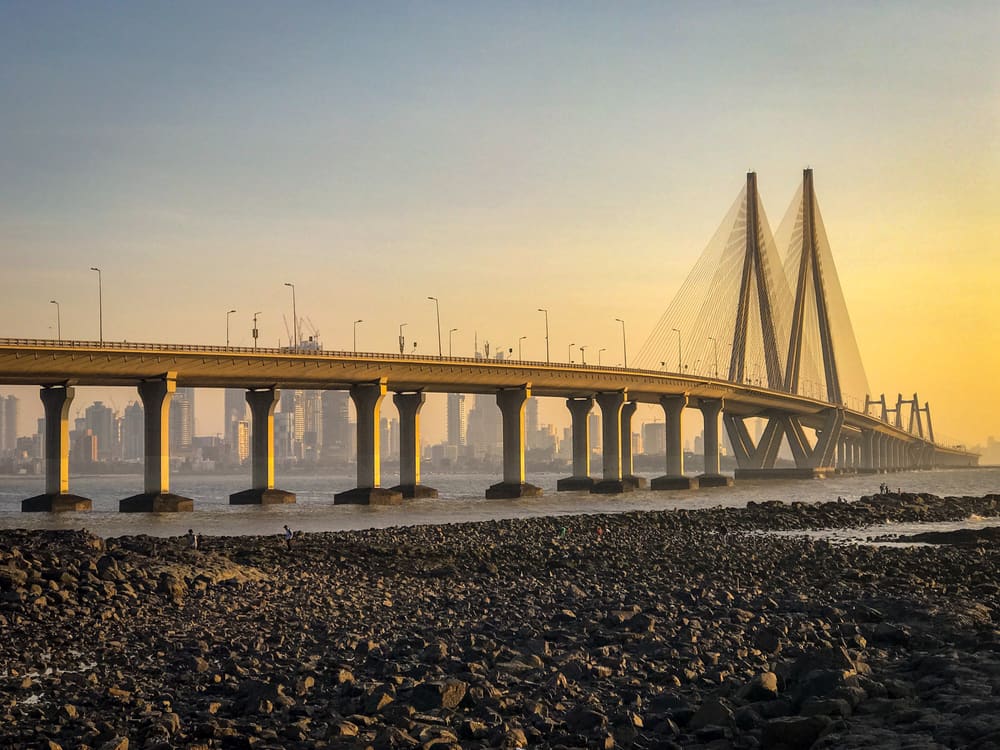
Header photo: The Bandra–Worli Sea Link by Rutiknatekar, CC BY-SA 4.0, via Wikimedia Commons.