Powai: A Neighbourhood Guide (2026)
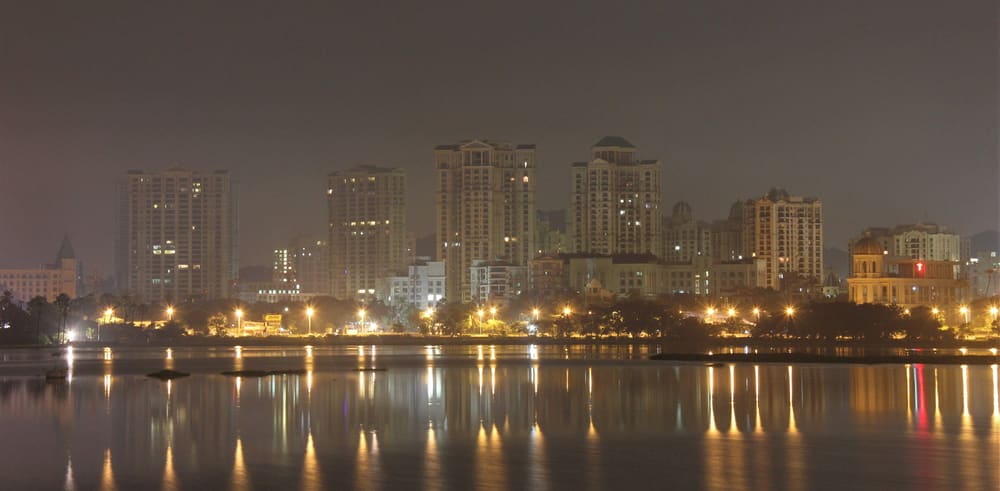
Powai grew up around a lake. In 1891 a stream feeding the Mithi river was dammed to add to Bombay’s water supply, and the reservoir it made is still the centre of the suburb. IIT Bombay, founded in 1958, sits along its eastern shore. From the end of the 1980s the Hiranandani group built Hiranandani Gardens to the south, a township of domed and columned towers designed by the architect Hafeez Contractor on what had been a quarry, followed by a business park and hotels on the lake. Today Powai is offices, start-ups, students and one of the few parts of Mumbai where you can walk around in the evening without fighting the traffic.
It is not a sightseeing district, and most people who come here are working, studying, sitting an exam at IIT or staying near the airport. But it is a pleasant place to spend an evening, and this guide is for them.
The short version
- Getting there: Kanjurmarg or Vikhroli on the Central line, then a ten-minute auto. From the west, Metro Line 1 to Saki Naka and an auto or taxi from there. Metro Line 6, with stations planned at Powai Lake and IIT, is still under construction.
- Time needed: two to three hours for the lake, Hiranandani and dinner
- Best time: early morning by the lake, or late afternoon into the evening
- Good to know: autos run here and are metered, so they are the easiest way to hop around.
An evening in Powai
This short route takes about an hour on foot before dinner. Start at about 5 PM.
- Powai Lake. Walk the promenade along Adi Shankaracharya Marg, the stretch of the Jogeshwari-Vikhroli Link Road (JVLR) that runs beside the water. It is about 1.8 km long, between the Ganesh Ghat and Pawar Wadi immersion points. Look across the water to the green hills of the national park and the IIT campus on the far shore. Be honest with yourself about what to expect: the promenade was built around 2008 and has had little upkeep since; parts of it have been damaged by metro and sewer works, and in 2026 the BMC hired consultants to plan its redevelopment. The lake itself is no longer drinkable and is often choked with water hyacinth.
- Mind the crocodiles. The lake has a resident population of mugger, or marsh, crocodiles; a BMC count in 2022 found at least 18. Stay on the path, keep away from the water’s edge, keep children close, and never feed anything.
- Hiranandani Gardens. Walk south into the township, five to ten minutes from the lake. The towers with their domes, pediments and columns are unlike anything else in Mumbai, and the streets below them have wide pavements, trees and a high street of shops and cafes. It is one of the few parts of the city that is easy and pleasant to stroll in after dark.
- Dinner. Most of the restaurants below are on Hiranandani’s high street or on Lake Boulevard, at the edge of the business park.
A few free hours in Powai
If you are here for an exam, an interview or a meeting and have some time to fill:
- Two hours: the walk above, with a coffee or an early dinner in Hiranandani.
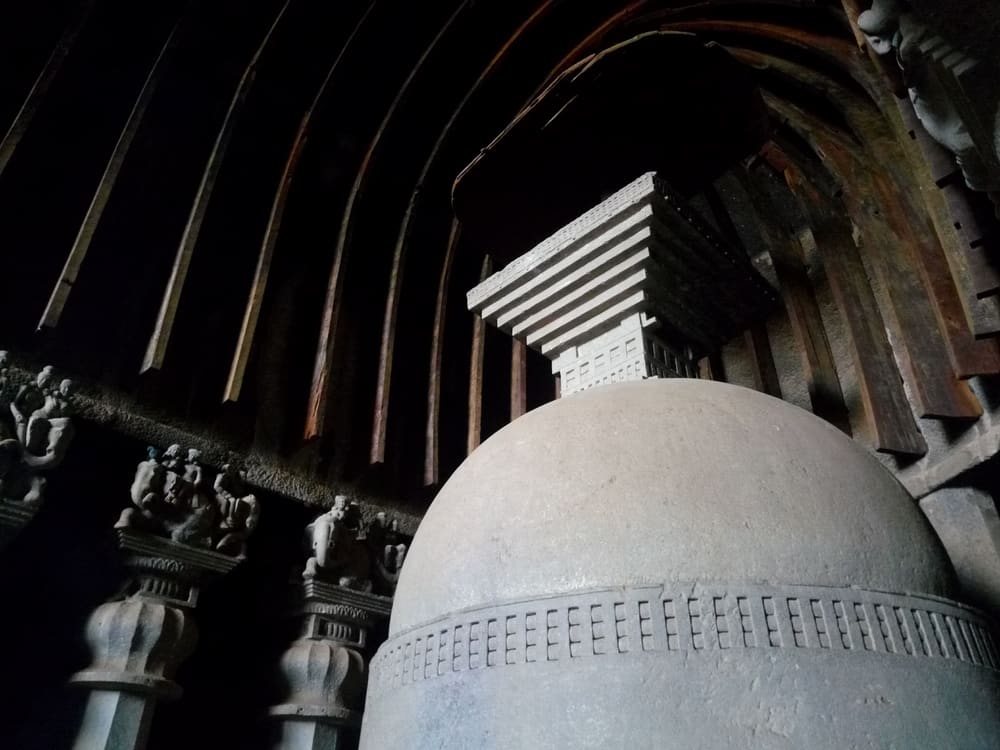
- Half a day: add the Mahakali Caves in Andheri East, about half an hour west along the JVLR by road. Nineteen Buddhist caves were cut into the rock there between about the 4th century BCE and the 6th century CE, and they are a protected monument of national importance. Check the opening hours before you go.
- A full day: head for the Sanjay Gandhi National Park and the Kanheri Caves at Borivali, or to the sea at Bandra or Juhu. Allow an hour or more each way by road at busy times.
IIT Bombay is not a sight. The campus is a working university with ID checks at the gates, and casual visitors without a reason to be there are not encouraged. It opens up to the public for its two big festivals, Techfest and Mood Indigo, both usually in December.
Where to eat
- Hiranandani and Lake Boulevard:
- Hitchki, a loud, Bollywood-themed bar with Indian bar food and cocktails, open until late.
- The Sassy Spoon, for European food and desserts.
- Eve, for pizzas, small plates and cocktails, with a spiral staircase and a wall of books.
- By the lake, at the Westin: Lake View Cafe, an all-day restaurant facing the water that opens early for breakfast, and Nawab Saheb for North Indian kebabs and curries, open for dinner only.
- On a budget: Hiranandani’s high street and the lanes around it have plenty of cheaper cafes, bakeries and quick-service places, popular with students.
See every restaurant we list on our Powai restaurants page.
When to come
- Early morning or evening, all year. The middle of the day is hot and the promenade has little shade.
- The monsoon (June to September). The lake fills and the hills turn green. In heavy rain the traffic on the JVLR slows to a crawl; leave plenty of time.
- Ganeshotsav (August or September). The lake is one of the suburbs’ main immersion points, with processions on the big days and the JVLR closed to heavy vehicles.
- December for Techfest and Mood Indigo at IIT, when the campus fills with visitors.
Practical notes
- Traffic. The JVLR is one of the city’s busiest roads and jams badly at peak hours. Leave extra time for flights and trains.
- The airport. Terminal 2 is close, usually half an hour or less by road outside rush hour. From 25 October 2026 every flight from the main airport uses Terminal 2; our arrival guide explains the change.
- Stations. Kanjurmarg is the closest station on the Central line; Vikhroli also works. Many fast trains do not stop at either, so check before you board.
- The lake. It is not for swimming or wading, whatever the weather.
- Getting on. By road, Bandra is about 45 minutes away outside rush hour and South Mumbai about an hour and a half. By train, take the Central line south from Kanjurmarg to Dadar or CSMT.
Sources
- Wikipedia, Powai Lake: https://en.wikipedia.org/wiki/Powai_Lake
- Wikipedia, Powai: https://en.wikipedia.org/wiki/Powai
- Wikipedia, Hiranandani Gardens: https://en.wikipedia.org/wiki/Hiranandani_Gardens,_Mumbai
- Free Press Journal on the run-down promenade and the BMC’s redevelopment plan (June 2026): https://www.freepressjournal.in/mumbai/mumbai-bmc-proposes-185-crore-master-plan-to-redevelop-powai-lake-promenade-after-years-of-neglect
- Wikipedia, Pink Line (Mumbai Metro): https://en.wikipedia.org/wiki/Pink_Line_(Mumbai_Metro)
- Insight IITB on campus entry rules (May 2025): https://insightiitb.org/iitb-campus-security-autos-deliveries-student-2025/
- Wikipedia, Mahakali Caves: https://en.wikipedia.org/wiki/Mahakali_Caves
Header photo: Hiranandani Gardens seen across Powai Lake by AKS.9955, CC BY-SA 4.0, via Wikimedia Commons.